• About
  • America’s Cup Guide
    • AC Guide & Calendar
    • America’s Cup World Series – Race Results & Standings
    • Teams – America’s Cup 2017
    • Rules – America’s Cup 2017
    • old AC Guide & Calendar
  • News
  • Videos
  • Search

Cup Experience

Many America's Cup fans say this is their best source of information.

  • About
  • America’s Cup Guide
    • AC Guide & Calendar
    • America’s Cup World Series – Race Results & Standings
    • Teams – America’s Cup 2017
    • Rules – America’s Cup 2017
    • old AC Guide & Calendar
  • News
  • Videos
  • Search

March 23, 2017 By Jack Griffin

Video – Team France America’s Cup Class Yacht Foiling in Bermuda

Team France has been out foiling in their America’s Cup Class yacht. Thanks to Oracle Team USA coach Philippe Presti for posting this video.

March 22, 2017 By Jack Griffin

America’s Cup Protocol Changes Allow Training Together
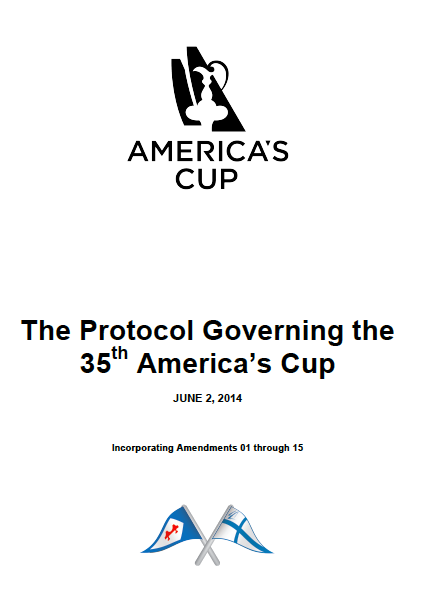
America's Cup Protocol Amendment 15
America’s Cup Protocol Amendment 15

Teams are now permitted to train together on 23 of the 69 days that remained before the first races of the round robin America’s Cup Qualifiers.
(i) March 22-26, 2017;
(ii) April 6-7, 2017;
(iii) April 10-12, 2017;
(iv) April 24-28, 2017;
(v) May 15-19, 2017;
(vi) May 22-23, 2017;
(vii) May 25, 2017;
(viii) May 26, 2017 – June 12, 2017.

The previous ban on sailing together was the result of an oversight. The protocol previously allowed the teams to train together on dates that were to be announced by the Commercial Commissioner at least a year before the first races of the America’s Cup Qualifiers. No dates were announced, effectively creating a ban.

Changes to the protocol can be made by agreement of the defender and the Challenger Commission. The commission makes its decision by majority rule, so at least three challengers must have voted for the change.

Watch a video clip of practice racing here.  Download the latest version of the Protocol here.

March 4, 2017 By Jack Griffin

Join Us On Board Arabella in Bermuda!

[convertkit form=4989178]

March 3, 2017 By Jack Griffin

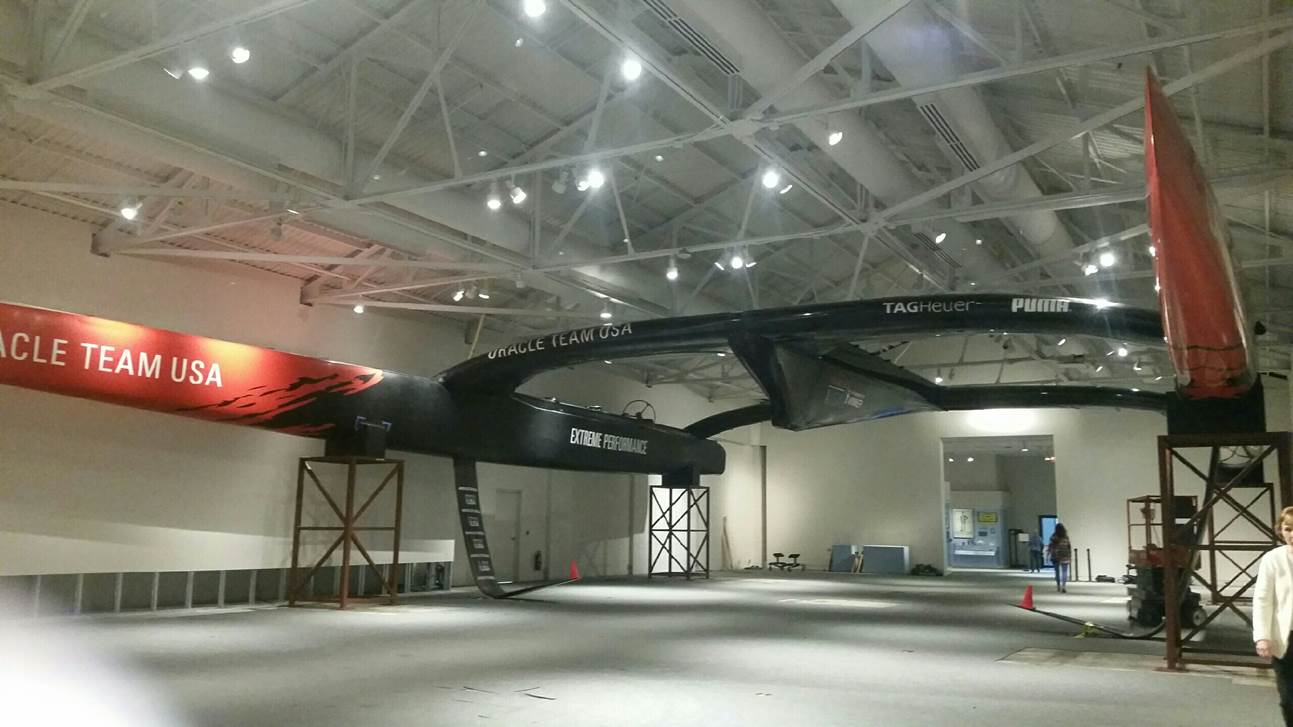
America’s Cup Winner “USA 17” AC72 at Mariners’ Museum

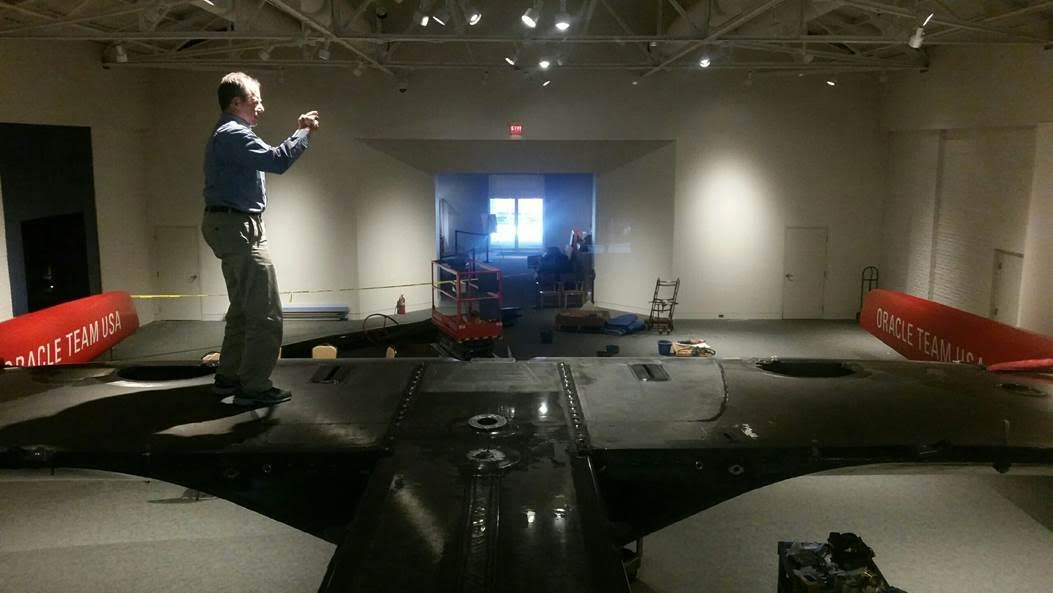
Winner of the 2013 America’s Cup in San Francisco, USA 17 has become a permanent exhibit at Mariners’ Museum in Newport News, Virginia. She will be the highlight of an America’s Cup exhibition, “Speed and Innovation,” which will open in May 2017. I got the chance to climb over and inside USA 17 during my recent meetings at the museum in my role as “guest curator” of the upcoming exhibit.
AC72 Winner America's Cup at Mariners' Museum
USA 17 – AC72 – Winner of the 2013 America’s Cup, at Mariners’ Museum in Newport News, Virginia


Mariners' Museum, Newport News, Virginia, home of America's Cup winner USA17 AC72 wingsail hydrofoiling yacht


Mariners' Museum, Newport News, Virginia, home of America's Cup winner USA17 AC72 wingsail hydrofoiling yacht


AC72 Winner America's Cup - mast step on crossbeam
The view from near the middle of the forward crossbeam made me realize how BIG this yacht is! And, how much higher the top of the pod is compared to the hulls. In manoeuvres, the crew were scrambling up and down much greater heights than you think when you see the videos. Athletes? You bet!

America’s Cup Geek Warning!

If you read on, I’ll take you deep in the weeds with details only America’s Cup geeks like me enjoy. Proceed at your own risk.

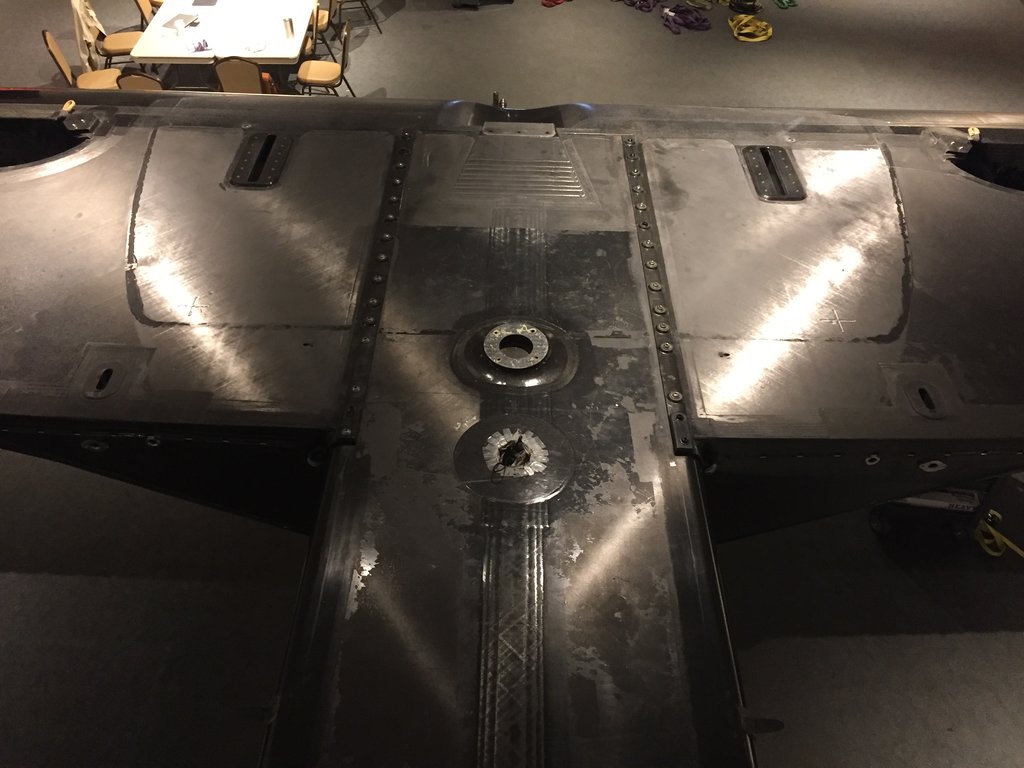
In the previous photo, did you notice those two circles on the centerline? The forward one is the mast step. The aft one was not used, but was prepared when the designers considered moving the wing aft to counter the lee helm problem. I wrote about this in my book “Turning the Tide” – so it was very cool to see it.


AC72 Winner 2013 America's Cup in San Francisco - starboard helm wheel. Oracle Team USA
Jimmy Spithill’s view. Notice the black buttons on the inside of the wheel – controls for daggerboard rake. Do you see the black button on top of the post for the wheel? Before a tack or gybe, Tom Slingsby would cross over to the leeward side to prepare the wing winch, and then hold down that button until the moment it was time to let the daggerboard come up.

Here’s a video that will show how important the button was. This is from Race 4, at Gate 2, the end of the first downwind leg. Ouch! In spite of the error, Oracle won this race, their first win. The error shows that early in the America’s Cup Match, they had still not mastered how to sail the boat. But by the finish of Race 8, their second win, they had improved dramatically, and were on their way to winning, even though at that point the score was 6-0 for the Kiwis.


Grinder Simeon Tienpont was called “Hydro” because he ran a lot of the hydraulic controls on the boat. Some of his controls are shown in the next two photos. Not shown are the controls to switch the flow of oil between hulls and the controls for daggerboard cant. A lot of hardware was stripped out of the hulls long before USA 17 was donated to the Mariners’ Museum.

AC72 Winner America's Cup - daggerboard control panel
AC72 Winner America’s Cup – daggerboard control panel connections in Simeon Tienpont’s cockpit


AC72 Winner 2013 America's Cup in San Francisco - daggerboard control buttons
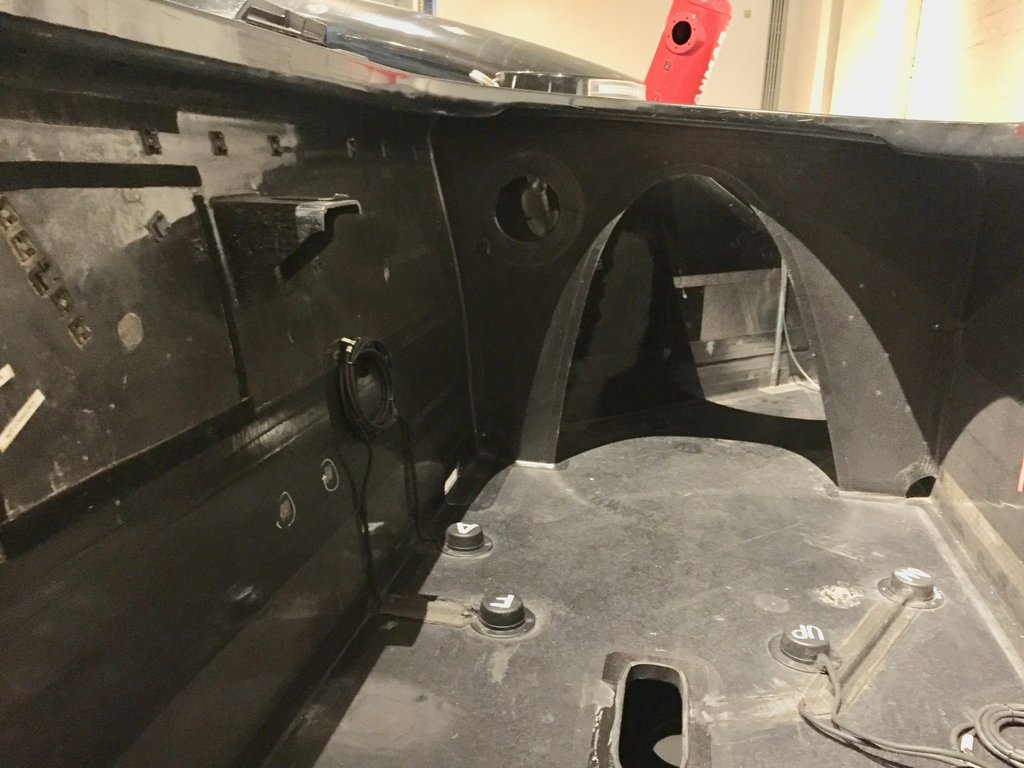
AC72 Winner 2013 America’s Cup – daggerboard control buttons on the cockpit sole: F (forward rake) A (aft rake) UP, DN. The buttons still click when pushed, but of course the hydraulics have been stripped out of the hull and the grinding pedestal has been removed.


AC72 Winner America's Cup mast step - 2 positions
AC72 Winner America’s Cup mast step – two positions. To correct the lee helm problem, the designers considered moving the wing aft but decided against the move. Do you remember the story about the famous lay day, Monday 16 September, with the score 7-1?  ETNZ rejected Regatta Director Iain Murray’s suggestion to race, in order to get back on schedule. ETNZ did not sail that day, but Oracle did, testing a simpler solution than moving the mast step aft – they put an additional 1.5° of rake in the “mast.” They thought this might help reduce their lee helm problem, but it did not, so they went back to the previous rake setting, and they never changed the mast step position.


AC72 Winner America's Cup - mast step inside pod
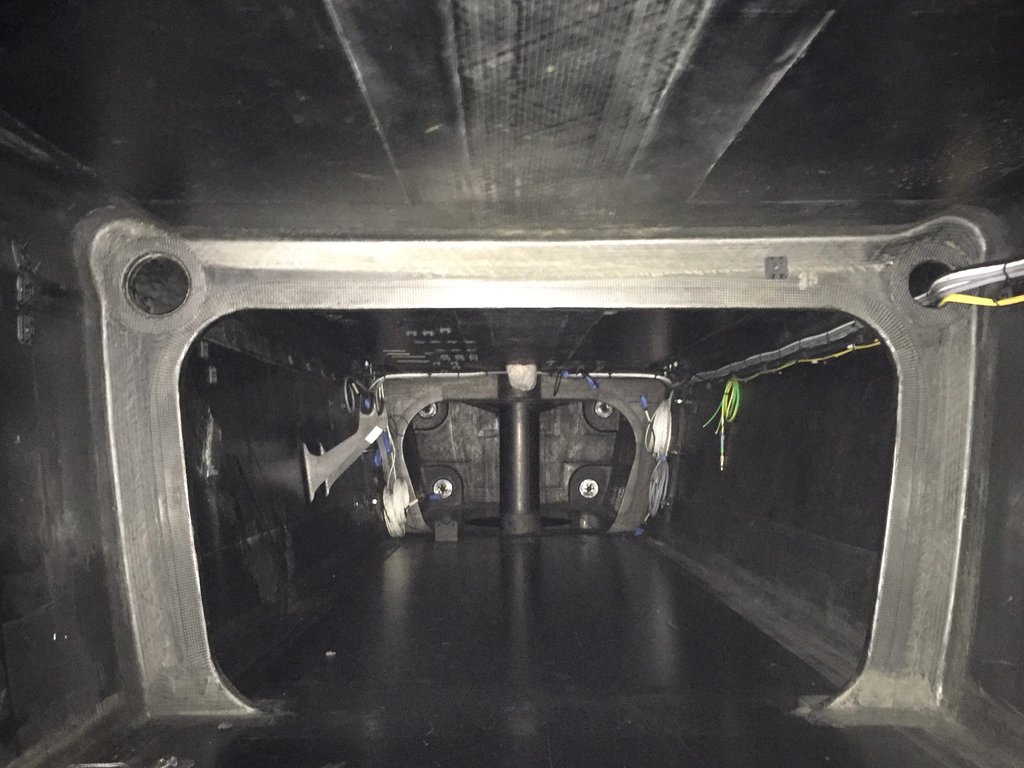
AC72 Winner America’s Cup – mast step inside the central “pod.” That post is just below the forward circle in the previous photo. Presumably they would have needed another post like that, had they moved the wing aft.


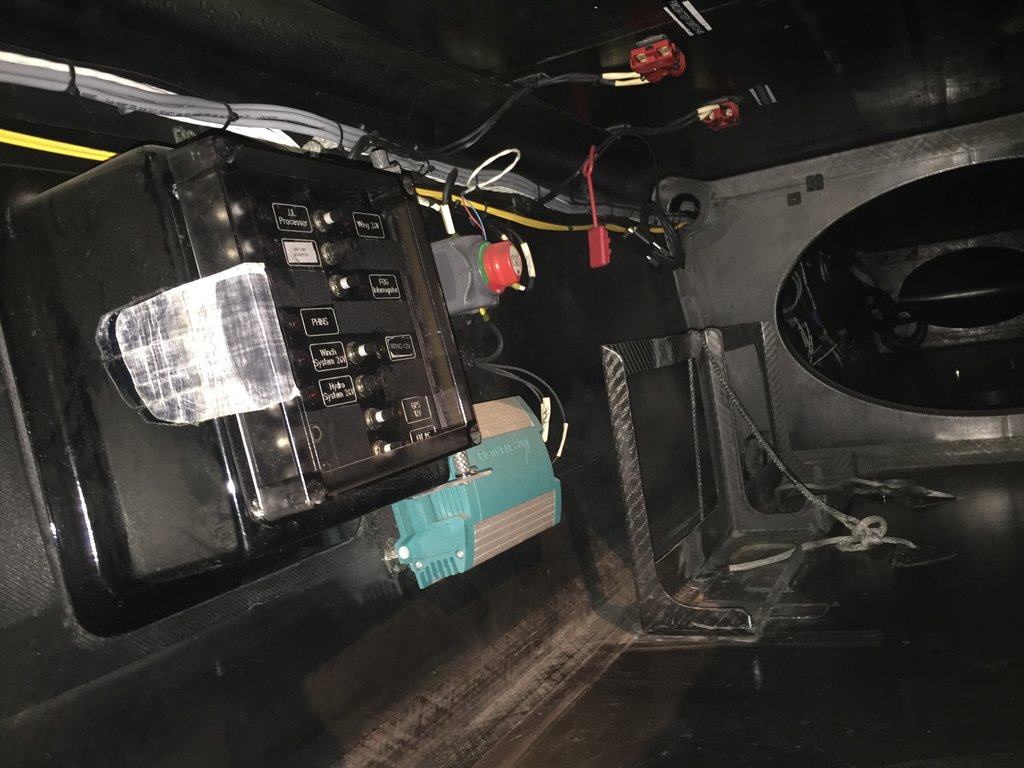
AC72 Winner America's Cup - electrical panel inside pod
AC72 Winner America’s Cup – electrical panel and battery brackets, inside the central pod


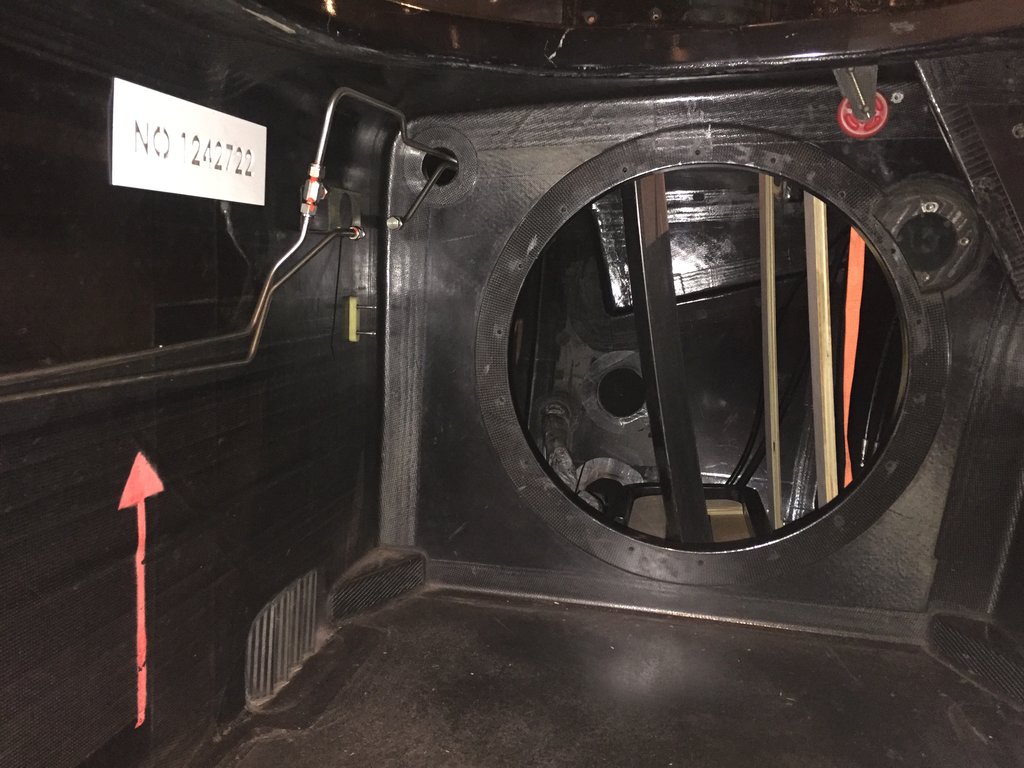
AC72 Winner America's Cup - daggerboard seen from forward cockpit
AC72 Winner America’s Cup – daggerboard seen from forward cockpit. That’s the daggerboard you see through the circular hatch. This is the cockpit where Shannon Falcone and Joe Spooner worked the grinding pedestal. BTW, just to the right of that red arrow, you can see one of the scuppers.


AC72 Winner America's Cup - daggerboard & box inside hull
AC72 Winner America’s Cup – daggerboard & box inside the port hull. The daggerboard “cage” has been removed, with the mechanical feedback foil control system designed by Dmitri Despierres (still with Oracle) and Neil Wilkinson (now with ETNZ). This is where the imaginary “Little Herbie” would have been installed, had it existed. I’ve actually corresponded with the retired Kiwi 747 pilot who wrote the (unsigned) description of the mythical “computer controlled gyro-stabilized Stability Augmentation System” that got the Kiwi media all aflutter. He said the media blew his document all out of proportion. My conclusion: Little Herbie either did not exist or was the best coverup since NASA faked that landing on the moon.


Some Interesting America’s Cup Artefacts

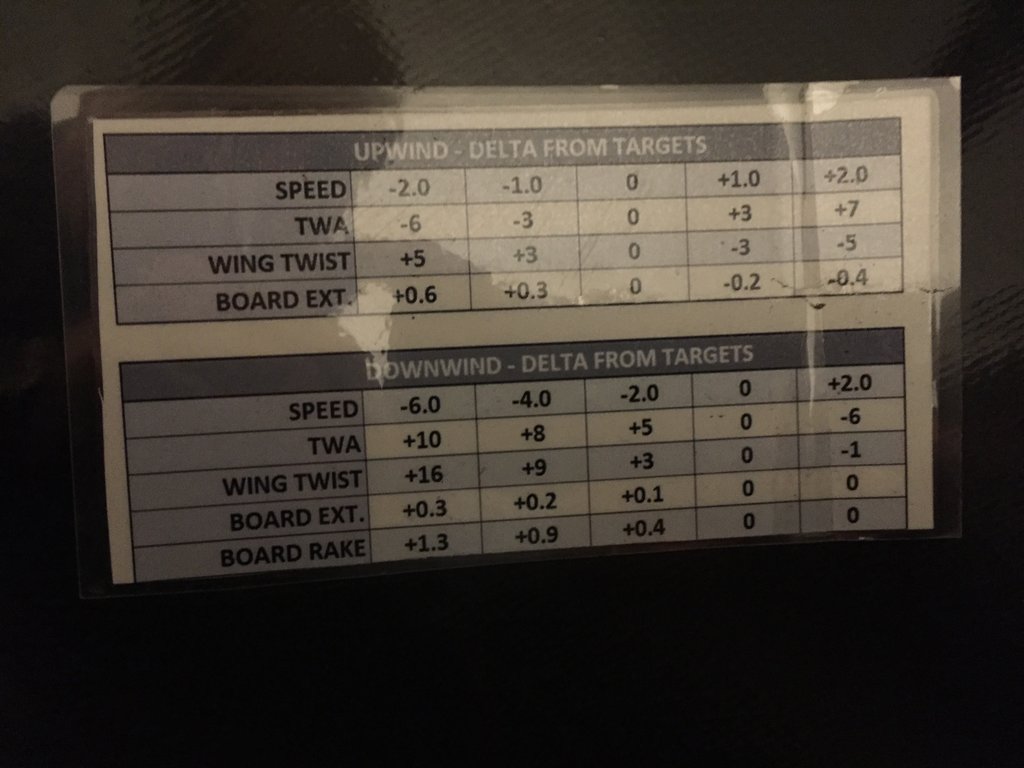
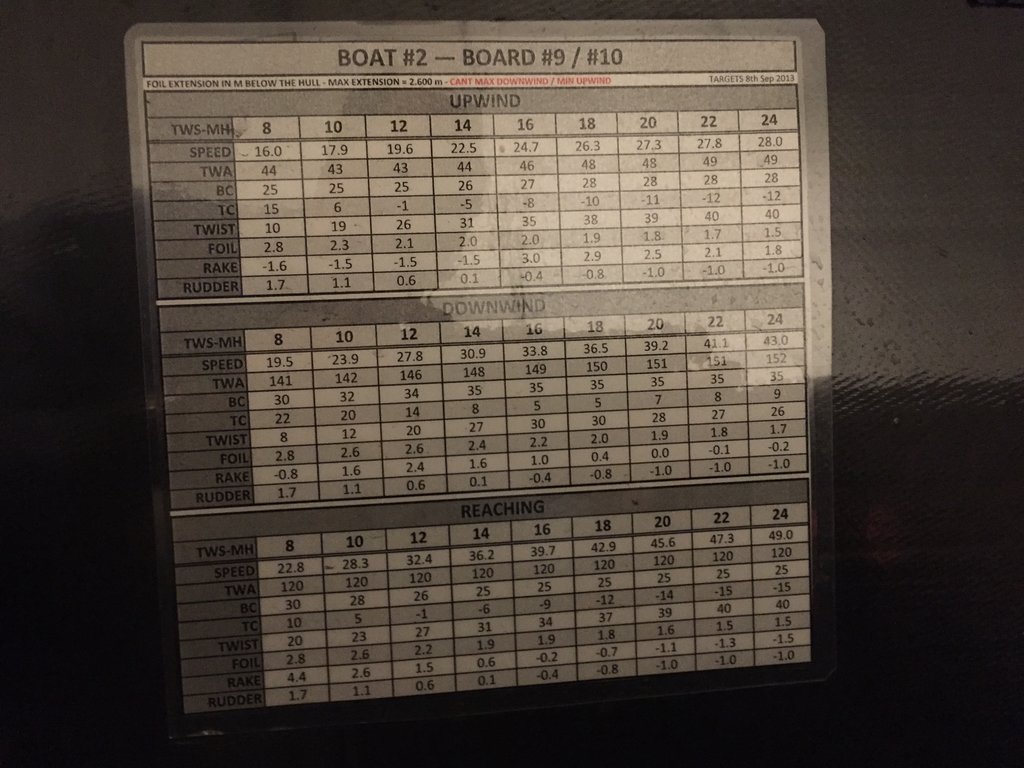
The next three photos show polar info that was left in the hulls.

AC72 Winner America's Cup - polars wing trimmer
AC72 Winner America’s Cup – polars  pasted next to the wing trimmer’s position.


AC72 Winner America's Cup - polars deltas
AC72 Winner America’s Cup – polars deltas.


AC72 Winner America's Cup - polars & daggerboard settings
AC72 Winner America’s Cup – polars & daggerboard settings. A couple of things to notice… The table is dated 8th September 2013 – the second day of racing. It has data for boards Nr 9 and Nr 10. On the first layday, Monday 9 September, they tested an asymmetric setup, with boards Nr 5 and Nr 10, but they chose not to race with that configuration. Oracle used the symmetric setup with boards Nr 9 and Nr 10 in all 19 races.

March 3, 2017 By Jack Griffin

1950’s Foiling Sailboat “Monitor”

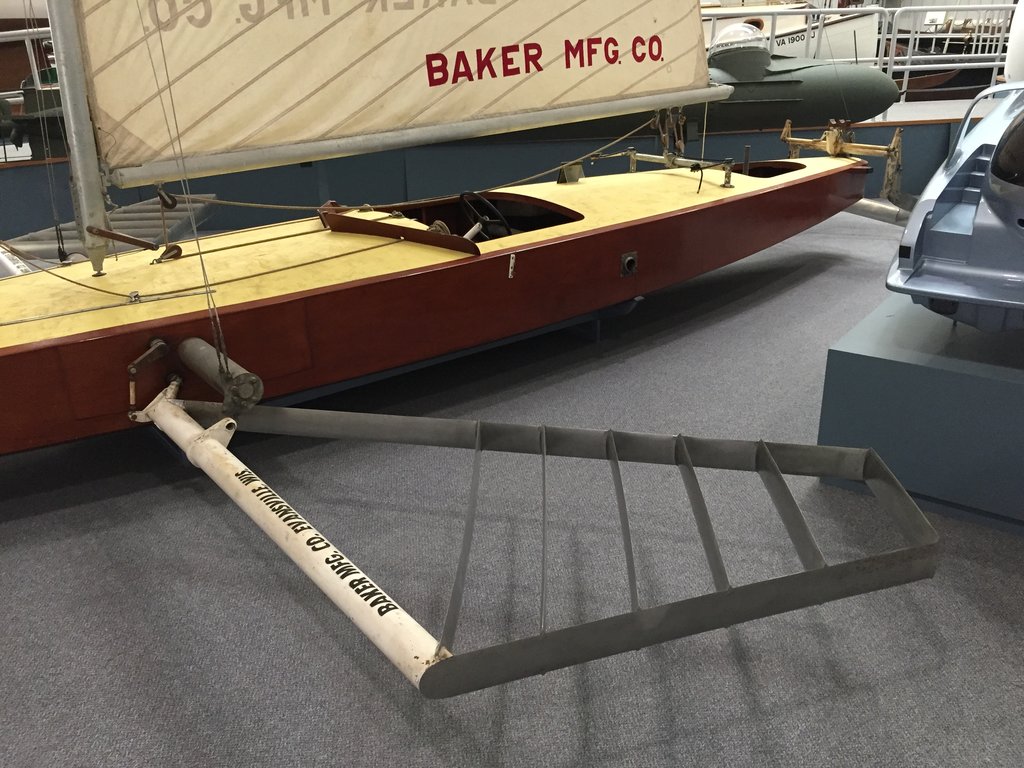
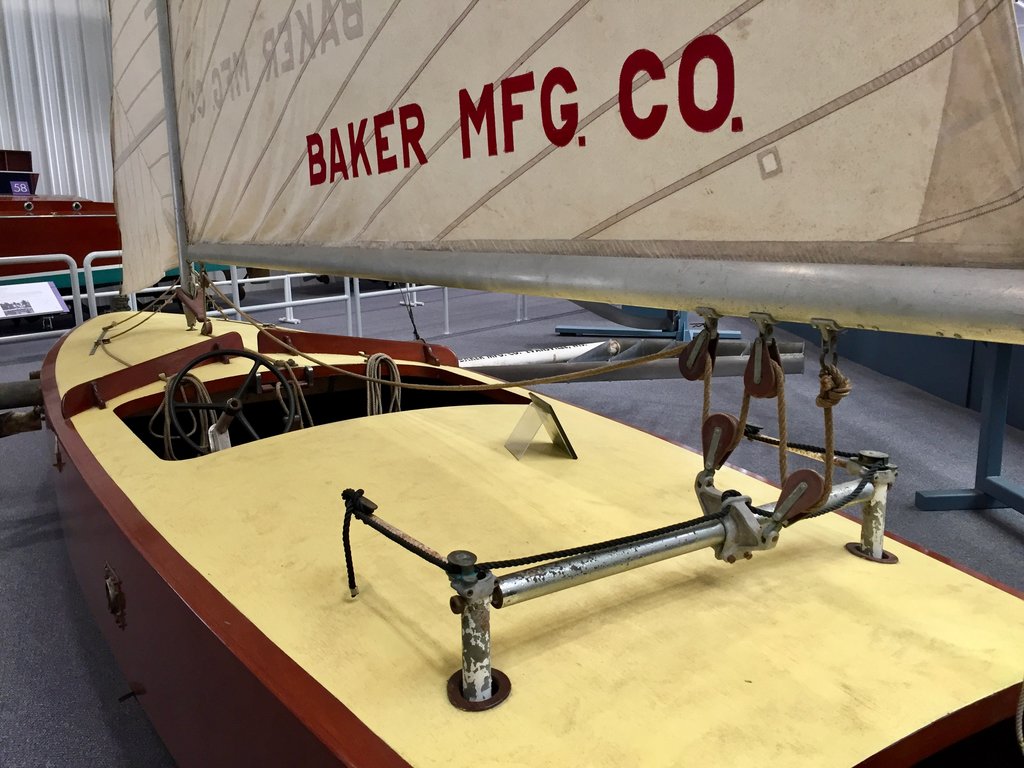
Gordon Baker developed and tested Monitor in the 1950’s. Monitor could get up on the foils in about 13 knots of wind and sail at about twice the true wind speed. Top speed was reported at over 30 knots, with some reports claiming 40 knots. At 40 knots, cavitation would probably have set in.

Monitor is on display at the Mariners’ Museum in Newport News, Virginia.
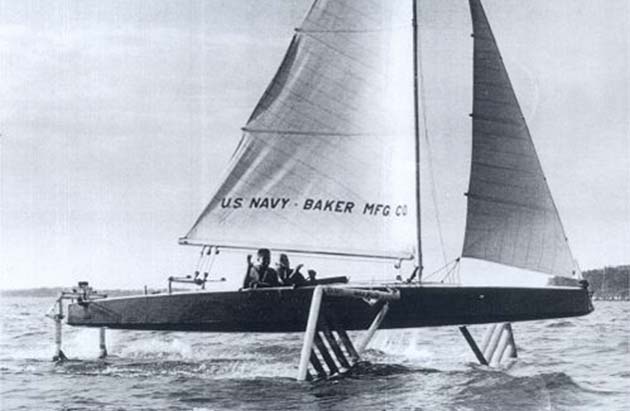
Gordon Baker's Monitor hydrofoil monohull sailboat for US Navy
Monitor hydrofoil monohull sailboat


Gordon Baker's Monitor hydrofoil monohull sailboat for US Navy
Monitor hydrofoil monohull sailboat


Gordon Baker's Monitor hydrofoil monohull sailboat for US Navy
Monitor sailboat stern hydrofoil


Gordon Baker's Monitor hydrofoil monohull sailboat for US Navy
Monitor cockpit hydrofoil controls. Hand cranks on port and starboard to lower the hydrofoils after launching, and then to control the angle of incidence. The wooden lever and metal rod in the center control the vang and traveller assembly.


Gordon Baker's Monitor hydrofoil monohull sailboat for US Navy
Detail of Monitor hydrofoil control


Gordon Baker's Monitor hydrofoil monohull sailboat for US Navy
Vang and traveller on Monitor hydrofoil sailboat


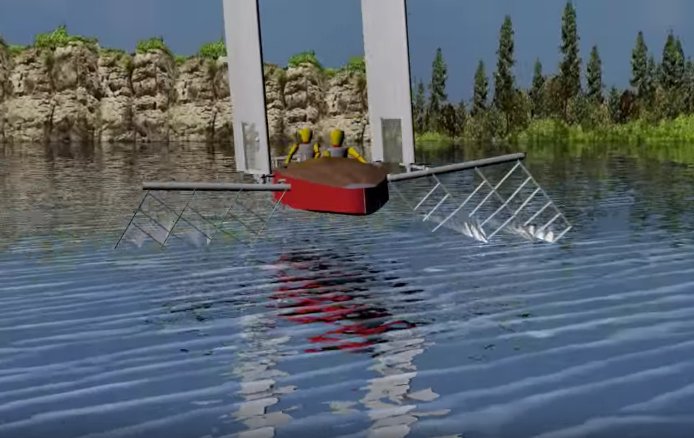
Gordon Baker's Monitor hydrofoil monohull sailboat for US Navy rendering with wingsails
Rendering of  second generation Monitor hydrofoil sailboat with wingsails


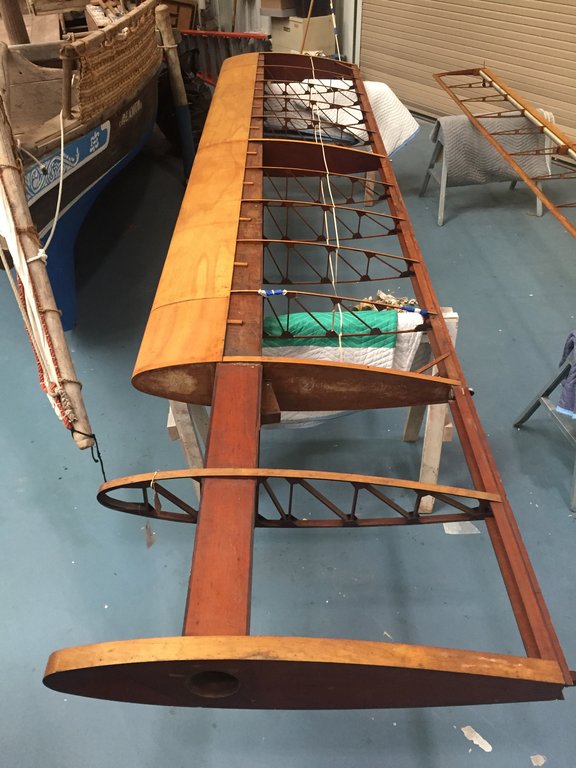
Wingsail for Gordon Baker's Monitor hydrofoil monohull sailboat for US Navy
Wingsail for Monitor hydrofoil sailboat awaiting restoration at Mariners’ Museum.
  • « Previous Page
  • 1
  • …
  • 4
  • 5
  • 6
  • 7
  • 8
  • …
  • 124
  • Next Page »
  • About
  • America’s Cup Guide
  • News
  • Videos
  • Search

Copyright © 2025 Cup Experience