• About
  • America’s Cup Guide
    • AC Guide & Calendar
    • America’s Cup World Series – Race Results & Standings
    • Teams – America’s Cup 2017
    • Rules – America’s Cup 2017
    • old AC Guide & Calendar
  • News
  • Videos
  • Search

Cup Experience

Many America's Cup fans say this is their best source of information.

  • About
  • America’s Cup Guide
    • AC Guide & Calendar
    • America’s Cup World Series – Race Results & Standings
    • Teams – America’s Cup 2017
    • Rules – America’s Cup 2017
    • old AC Guide & Calendar
  • News
  • Videos
  • Search

April 4, 2016 By Jack Griffin

Race Course for New York America’s Cup World Series

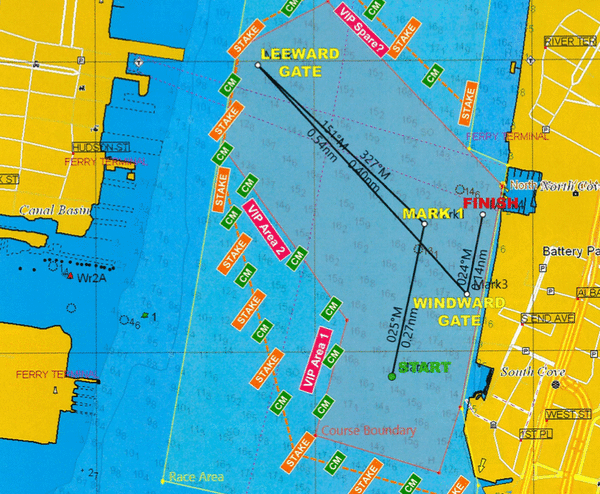
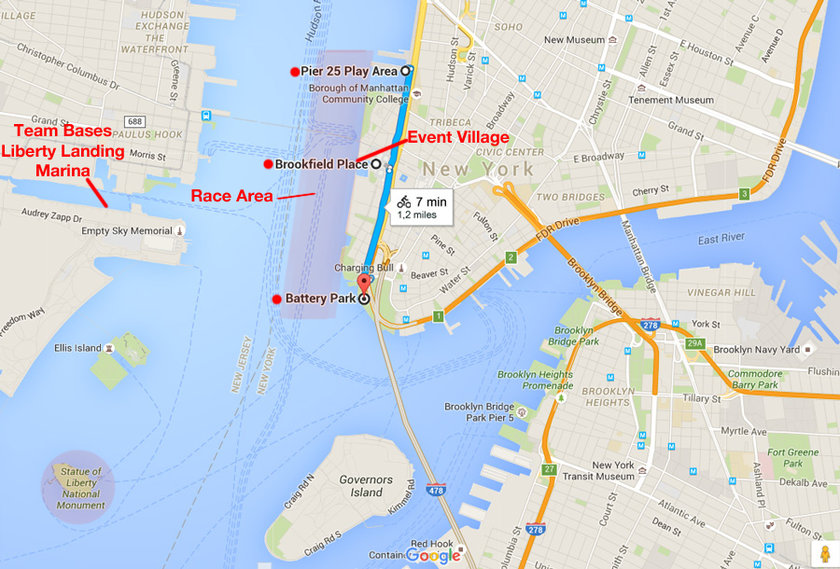
Here’s a possible race course for the America’s Cup World Series in New York, in case of wind from the south east. Regardless of wind direction, AC Regatta Director Iain Murray will try to set the course so that the finish is near the Event Village at Brookfield Place. Almost any course layout will present challenges from the wind shadows of the lower Manhattan skyscrapers.

Stake boats (the orange rectangles) will be in place to delimit the racing area. Course Marshal boats (green, marked “CM”) will keep the spectator fleet outside the race area. Official VIP hospitality boats will be positioned in the red areas..
be68467d-9ba4-4b51-bb1d-8cc98ce2fc92

e40ca422-8677-485a-91f6-efac642e67791

April 4, 2016 By Jack Griffin

Emirates Team New Zealand – Hard, Serious Work

ETNZ makes a powerful impression by leading the standings in the America’s Cup World Series. But the remoteness of their country and their natural reticence means we have little news about how their development is going. Here is a video showing some of the unglamorous work that goes into designing a winning boat – testing materials to the breaking point so you know just how light you can build each component.

Testing to Destruction – Emirates Team New Zealand – Andy Kensington

April 4, 2016 By Jack Griffin

Lots of Action in Bermuda – Don’t Wait for 2017

Thanks to Oracle sailor Ky Hurst for this video of four AC45x experimental catamarans testing on the Great Sound. There will be plenty of action on the Great Sound in 2016 and it will heat up even more in early 2017 when all six teams are training with their AC Class race boats.

In this short clip you can see Artemis Racing with the clear wing sailing right to left. The two Oracle Team USA  boats move left to right, followed by SoftBank Team Japan.

March 28, 2016 By Jack Griffin

For Geeks: Cavitation Bulbs on Rudders

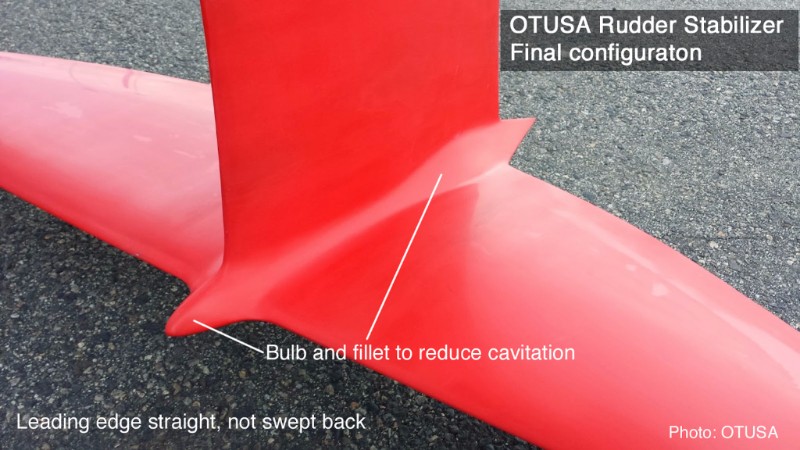
When boatspeed approaches 40 knots, very low pressure areas form on the daggerboards and rudders, causing the water literally to boil and form cavitation bubbles. This causes severe vibration and increased drag. Almost halfway through the America’s Cup Match in 2013, Oracle’s Paul Bieker devised fillets and torpedo shapes for the rudder wings.

42805117-e6c3-4566-8cc4-08ce40c7fc99

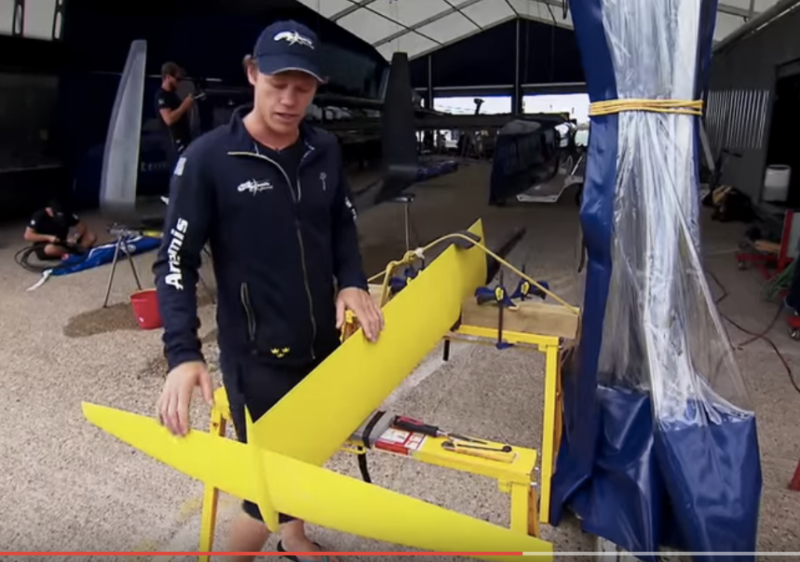
We can see similar shapes on the rudders of the one design AC45F cats racing in the America’s Cup World Series, and on the experimental boats that the teams use for testing

ec3e13a2-2e32-4a41-acc4-730701fd319d

Artemis skipper Nathan Outteridge with an AC45F rudder. Notice the bulb where the vertical section and the wing meet.

d1d19d4b-7273-4d3f-bc60-ca7a3a383016

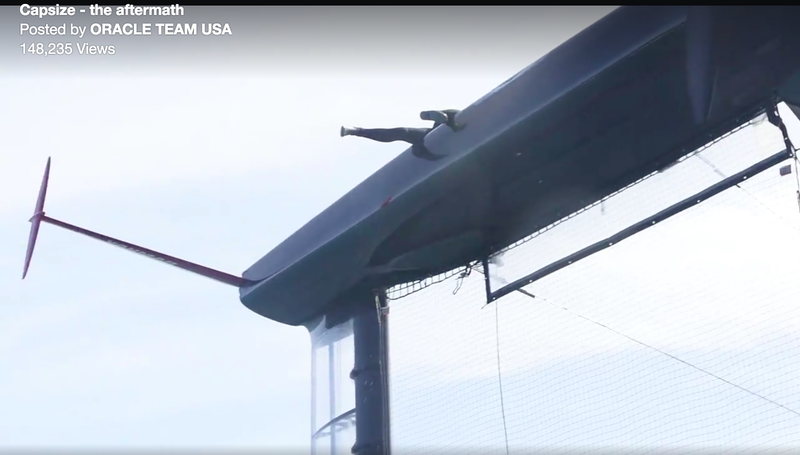
Oracle’s capsize on March 2 gave us a good look at the rudder wing and anticavitation shapes.

March 28, 2016 By Jack Griffin

Interview with Nick Holroyd, Head of Design Softbank Team Japan

Nick Holroyd leads the design effort for SoftBank Team Japan. With his expertise in computational fluid dynamics and appendage design, he’ll lead much of the experimental development process that will enable the boats to foil more efficiently and with more control.

“First, there’s a lot of work to assess the package we’ve got”, explained Nick. “Fortunately, the design space is narrowed down – appendages, control systems, wing control, ergonomics, how to deal with the shortage of power on the boat in terms of hydraulic power from the boys grinding – those are all areas teams know they really need to focus on at this point.”

Specifically, dagger board foil design will take the priority seat in the development phase as the team narrows down which shapes will go into production for their future America’s Cup Class yacht.

“The way the protocol works is you’re only ever allowed to fit 4 boards [2 sets] into the America’s Cup Class yacht. Depending on how you want to design those – for wind range, sea state, stability, etc. – then the first set you launch the boat with will be one of your racing sets. You’re focusing on both the refinement and revolution game at this point so the pressure is on.”

Add to this the fact that contractors have specific build windows in which to construct these underwater carbon fiber wings and it becomes clear that every practice session on the water is precious.

“The decision date looms pretty fast when you consider typical build time for new daggerboards is 3 months. The clock is very much ticking.”

Watch the interview. Look carefully at about 40 seconds into the video – you’ll see the anti cavitation bulb on the rudder of their AC45F.

The Team: Nick Holroyd

  • « Previous Page
  • 1
  • …
  • 35
  • 36
  • 37
  • 38
  • 39
  • …
  • 124
  • Next Page »
  • About
  • America’s Cup Guide
  • News
  • Videos
  • Search

Copyright © 2026 Cup Experience