• About
  • America’s Cup Guide
    • AC Guide & Calendar
    • America’s Cup World Series – Race Results & Standings
    • Teams – America’s Cup 2017
    • Rules – America’s Cup 2017
    • old AC Guide & Calendar
  • News
  • Videos
  • Search

Cup Experience

Many America's Cup fans say this is their best source of information.

  • About
  • America’s Cup Guide
    • AC Guide & Calendar
    • America’s Cup World Series – Race Results & Standings
    • Teams – America’s Cup 2017
    • Rules – America’s Cup 2017
    • old AC Guide & Calendar
  • News
  • Videos
  • Search

January 9, 2017 By Jack Griffin

Team Updates – Monday 9 January 2017

Emirates Team New Zealand Five time America’s Cup winner and AC Hall of Famer Murray Jones has joined ETNZ to help coach Peter Burling on match racing and on the cutthroat competition in the America’s Cup. Murray was one of the “tight five” who moved with Russell Coutts to Alinghi for the 2003 AC. Coutts recruited him to Oracle for the 2013 cycle, but now Murray is back with Team New Zealand.

ETNZ started tearing down their team base in Auckland right after New Year’s, to ship it to Bermuda. Presumably their AC 45X test boat is being torn down as well. The team will build their AC Class race boat using many components from the test boat. They will launch in Auckland by the end of January and sail it several weeks before shipping the boat to Bermuda. When the race boat gets to Bermuda, they will have only one boat.

Groupama Team France The team stopped sailing their AC45X test boat on 18 December. The boat was shipped from Lanveoc to Vannes to be dismantled for parts for the AC Class.
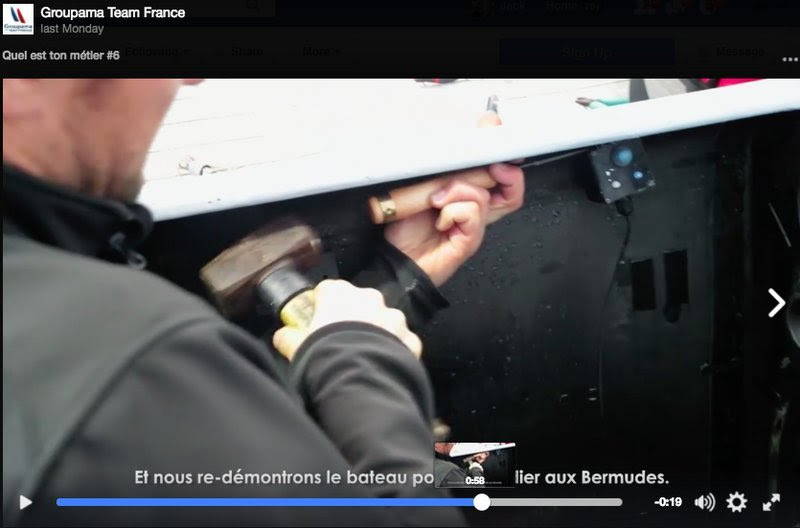
On 4 January the team began packing up their base in Lorient for the the move to Bermuda. Most of the team will arrive in Bermuda in February. They plan to have their race boat in there by March.

Land Rover BAR The Brits arrived in Bermuda in early December. They had their final sail of 2016 on 21 December and started up again sailing T3 on the Great Sound on 4 January. Their built-in-Britain race boat arrived in Bermuda on 3 January.
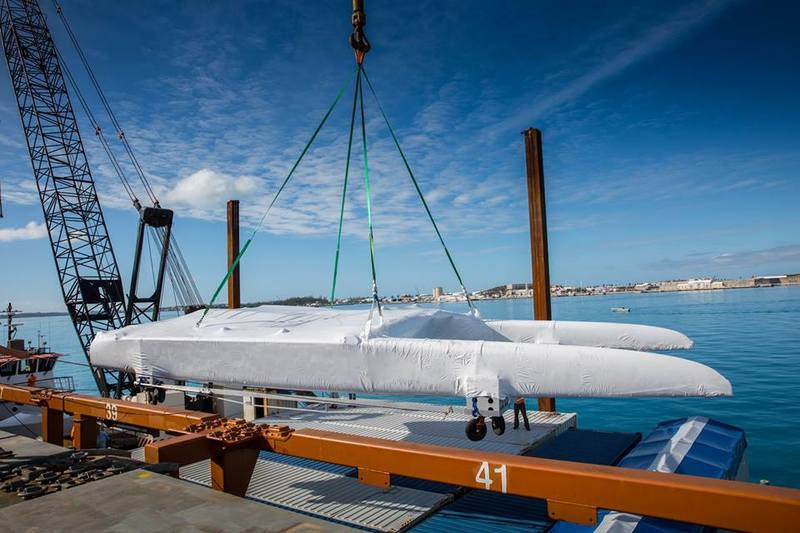
They will take their “blackout period” beginnining 9 January and launch the race boat on 6 February.

SoftBank Team Japan Like the other Bermuda-based teams, Team Japan will probably launch their AC Class race yacht on 9 February. Team Japan bought their design from Oracle, and former Team New Zealand design team leader Nick Holroyd has helped them with development. Their website lists only eight sailors, not enough to sail both their AC Class race boat and their AC45X test boat.

Artemis Racing In early December Artemis began practicing match race manoeuvres with their two test boats. In a recent video, Francesco Bruni gives a tour of the cockpit and some of the controls on the team’s first AC45X test boat “Turbo 1.”
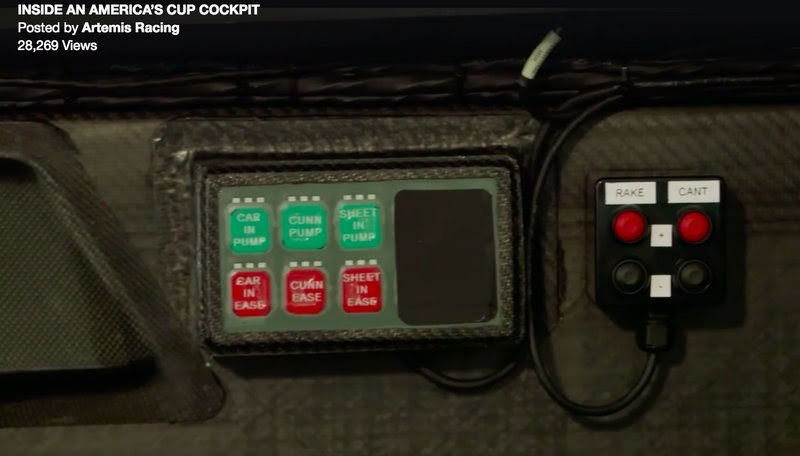
Watch the video here – skip forward to the six minute mark.

Oracle Team USA The team returns 9 January from time off for the holidays. We can expect to see them sailing their AC45X test boats in January. They will probably launch their race boat on 6 February.
January 9, 2017 By Jack Griffin

Why No Team Launched Their Race Boat Yet

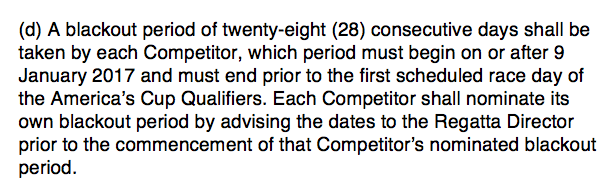
Teams were allowed to launch their AC Class race boats almost two weeks ago, but no one did. Why not? It’s not only the holiday schedule. The rules changed. Again. All teams must pick 28 consecutive days when they do not sail their AC Class yachts. If they take their blackout days after launching, they may not work on their boat during the blackout period. So the only logical thing to do is to take your blackout period before launching. A quick look at a calendar lets us figure that the four teams already in Bermuda – Oracle, Japan, Artemis and BAR – should launch on Monday 6 February. This will leave them 109 days to develop and learn to sail their race boat before the first day of racing on Friday 26 May.
Why the rule change? It is probably part of making amends to Team New Zealand for ACEA pulling the round robin AC Qualifiers out of Auckland back in March 2015. Read about that dispute here. Confidentiality rules prevent the teams from confirming that the Arbitration Panel awarded damages to ETNZ. ETNZ will use the blackout period to ship their boat to Bermuda. Groupama Team France will do the same. Rules geeks who want all the details can download the most recent Protocol here and read Article 35.5.

December 5, 2016 By Jack Griffin

2017 Racing in Bermuda – Three Phases

The America’s Cup Match is the final and most important phase, between defender Oracle Team USA and the winner of the “Challenger Playoffs” (formerly known as the Louis Vuitton Cup). Racing begins on 26 May 2017 with the double round robin “America’s Cup Qualifiers.” All six teams, including defender Oracle, race in the round robin. One challenger is then eliminated. The four remaining challengers go into the “Challenger Playoffs” for first-to-five-points semi-finals and and finals. The America’s Cup Match is first-to-seven-points. If either team in the America’s Cup Match won the Qualifiers, their opponent starts with a score of minus one (-1). This is for the TV schedule, to increase the likelihood of the AC Match being completed on the second Sunday, 25 June.

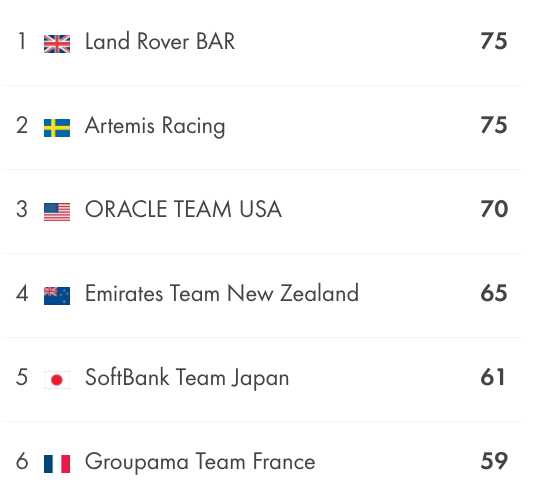
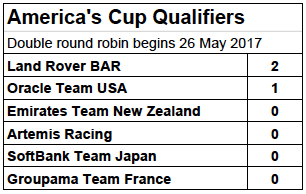
The America’s Cup World Series finished last month. Winner Land Rover BAR earned two points in the AC Qualifiers; runner-up Oracle earned one. Leaderboard for the round robin AC Qualifiers that begin 26 May 2017 in Bermuda:

Land Rover BAR and Oracle earned the bonus points from the AC World Series. At the end of the Qualifiers, ties will be broken according to the final results of the AC World Series.

December 5, 2016 By Jack Griffin

What the Designers Have Been Doing

You probably know that the AC Class yachts that will race in 2017 are largely one design – the shape of the wing, the hulls, the pod under the wing and the crossbeams are all fixed by the class rule. The same is true for cockpits and grinding pedestal positions. This leaves aerodynamic fairings, daggerboard shapes, rudder shapes, wing internal structures and control systems as the area for the designers to work their magic. The teams have been testing design ideas on their “AC45X” experimental boats – sometimes called “turbo” or “sport” boats.

Daggerboard design

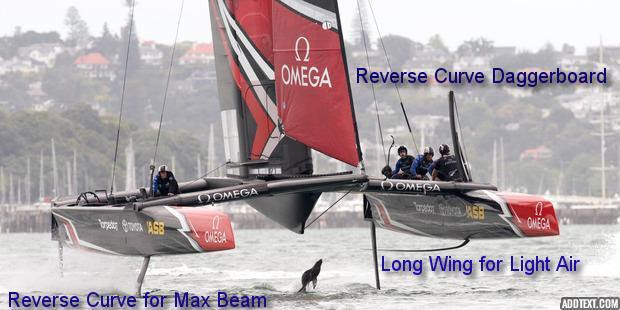
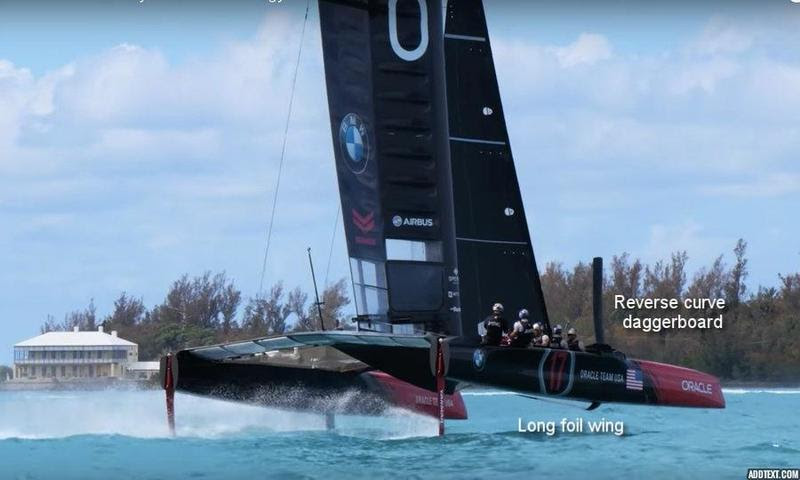
In light air the boats will need longer wings on the daggerboards to provide enough lift for foiling. In stronger winds teams will use shorter wings with lower drag. Crossover conditions will be challenging to decide whether to use the high lift or the low drag boards. There has been a lot of talk about upwind foiling and foiling tacks, but those techniques require sailing longer distance over a less direct course.

You can see the long wing and the reverse curve of the daggerboard on the port side of Emirates Team New Zealand’s AC45X test boat. On the starboard side you can see how the reverse curve gets the board out to the maximum beam to increase righting moment. (The sea otter seems to want a close look.)

In a New York Times article, Oracle designer Scott Ferguson talks about longer daggerboard wings for light air and shorter daggerboard wings for medium to heavy air. Like the Kiwis, Oracle has been testing longer foil wings as this photo shows:


Rudders and boat building strategy

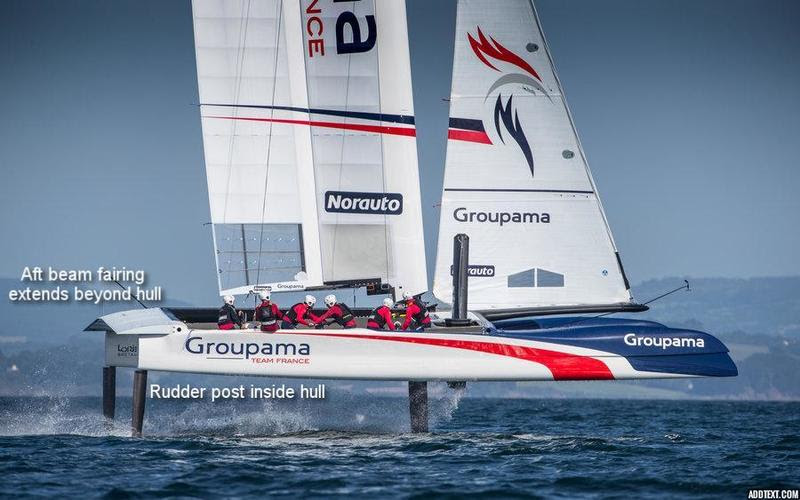
Groupama Team France mounted their rudders in the hulls so they can save money by using the rudders from the test boat in their race boat.

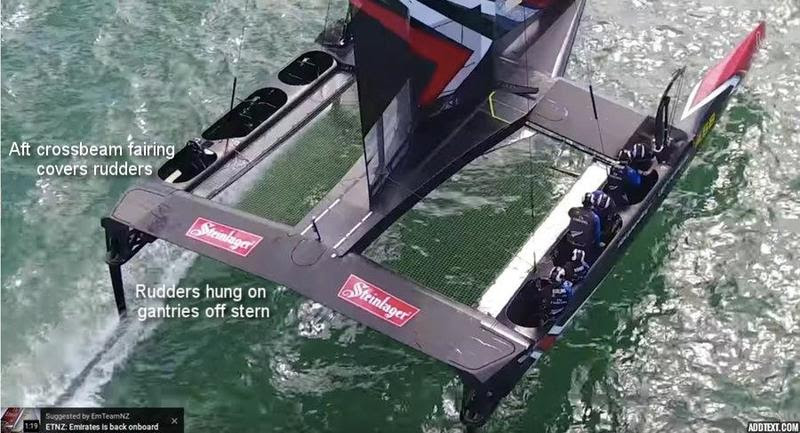
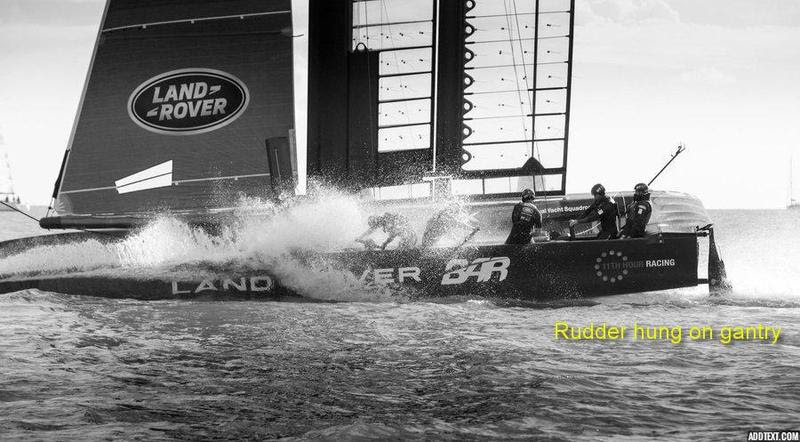
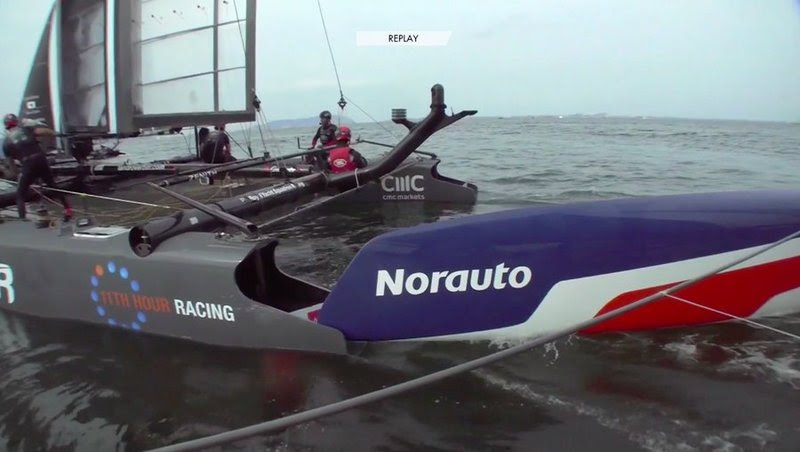
Land Rover BAR and Emirates Team New Zealand wanted to test the geometry of the slightly longer AC Class race boat, so they built special rudders that could be hung on gantries off the stern.

Team France and ETNZ will use most of the components of their test boat to build their race boat, saving money. Essentially, they will just change the hulls. Like Oracle, Artemis and Team Japan, BAR will have a test boat and a race boat in Bermuda so they can do two boat testing.

November 21, 2016 By Jack Griffin

Results from Fukuoka

All six races were run in light, shifty conditions. Land Rover BAR and Artemis Racing tied on points, with BAR winning the regatta by finishing ahead of Artemis in the final race. Oracle finished third. Team New Zealand finished off the podium again and out of the points for the overall series. They were hurt by a poor sail choice in the last race, when they kept their jib in its bag and sailed upwind with their big Code 0 while all the others were using jibs.


In the first race on Sunday, BAR picked up a penalty in the pre-start but were able to push both Oracle and Team New Zealand past the end of the starting line, preventing both of those teams from threatening the Brits’ overall series lead.


There were several interesting penalty situations that I’ll explain in next week’s newsletter.

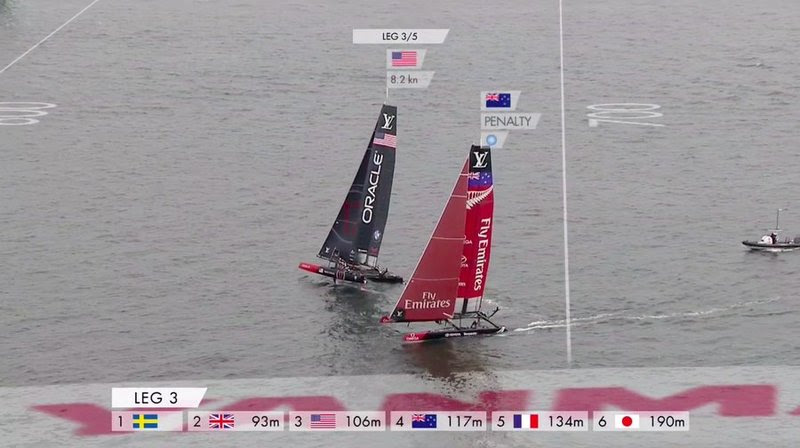
Remember: the blue light means a boat has a penalty; the green light means they are near a course boundary or a rounding mark.


Here we see how Team France picked up a penalty for not keeping clear and making contact with BAR near the leeward gate in Race 5.


Team New Zealand had a double penalty in Race 5. I’m getting a clarification and will explain it next week. If you want to get a head start on understanding what happened, read Rule 44.4(c) in the Racing Rules of Sailing – AC Edition, which you can download here.

  • « Previous Page
  • 1
  • 2
  • 3
  • 4
  • 5
  • …
  • 17
  • Next Page »
  • About
  • America’s Cup Guide
  • News
  • Videos
  • Search

Copyright © 2026 Cup Experience