• About
  • America’s Cup Guide
    • AC Guide & Calendar
    • America’s Cup World Series – Race Results & Standings
    • Teams – America’s Cup 2017
    • Rules – America’s Cup 2017
    • old AC Guide & Calendar
  • News
  • Videos
  • Search

Cup Experience

Many America's Cup fans say this is their best source of information.

  • About
  • America’s Cup Guide
    • AC Guide & Calendar
    • America’s Cup World Series – Race Results & Standings
    • Teams – America’s Cup 2017
    • Rules – America’s Cup 2017
    • old AC Guide & Calendar
  • News
  • Videos
  • Search

September 4, 2013 By Jack Griffin

America’s Cup defender penalized for cheating


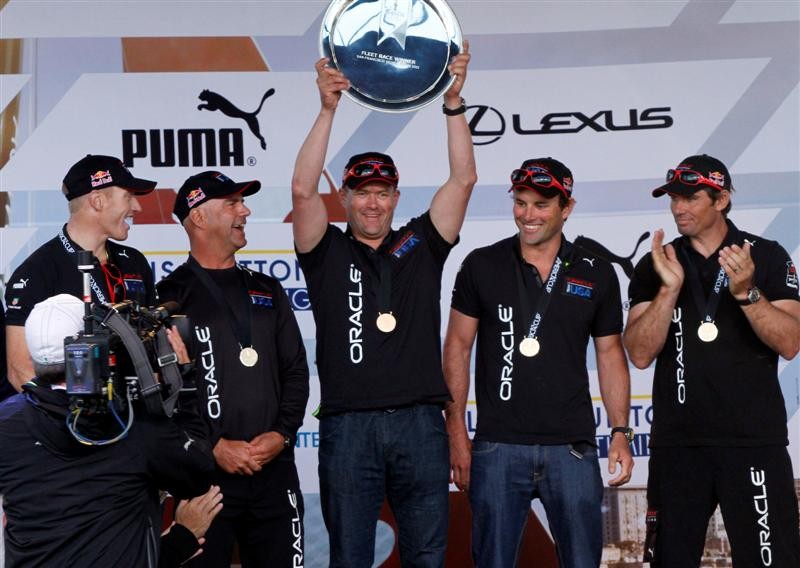
Oracle Team USA wins America's Cup World Series - San Francisco
Oracle Team USA wins America’s Cup World Series – San Francisco


America’s Cup defender Oracle Team USA loses two points in the “first to nine” America’s Cup Match

Oracle Team USA will lose the first two points they score in the America’s Cup Match. This means they would need to win 11 races to score the nine points needed to win the America’s Cup Match. Emirates Team New Zealand still needs to win nine races to score nine points and to win the Match.

America’s Cup sailor penalties – even worse than the lost points?

OTUSA’s key sailor, wing trimmer Dirk de Ridder, is forbidden to sail and is excluded from all activities for the remainder of this America’s Cup. This may be even more significant than losing two points. The team work between the helmsman and the wing trimmer is crucial – the helmsman has the steering wheel and the wing trimmer controls the accelerator.

Additional penalties for the America’s Cup defender

But wait, there’s more…   Sailor Matt Mitchell must sit out the first four races. Two members of the shore crew – Andrew Walker and Bryce Ruthenberg are  excluded from all activities. The team must pay a $250,000 fine.

Why were penalties assessed? Why in the America’s Cup?

  • Racing a modified “one design” AC45 is forbidden. It does not matter if the modification actually improved performance or reliability.
  • Even though the AC45s are not raced in the America’s Cup Match, the America’s Cup World Series was defined in the Protocol as being part of the America’s Cup Event. The Protocol also requires each team “use its best efforts” to avoid “any act or conduct” … “that may impair public confidence in the honest and orderly conduct of the America’s Cup.
  • The Protocol empowers the Jury to order the “loss of existing or future points, scores or races”
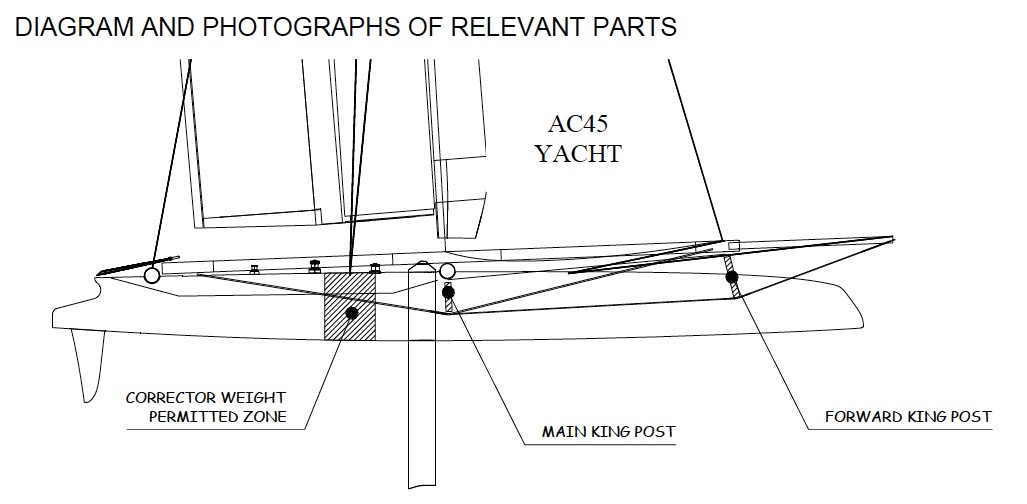
Cheating in America's Cup 2013. Oracle Team USA added weight and used illegal parts in their "one design" AC45 yacht.
Cheating scandal AC45 2013.  Diagram from the jury’s report on penalties

Background and details

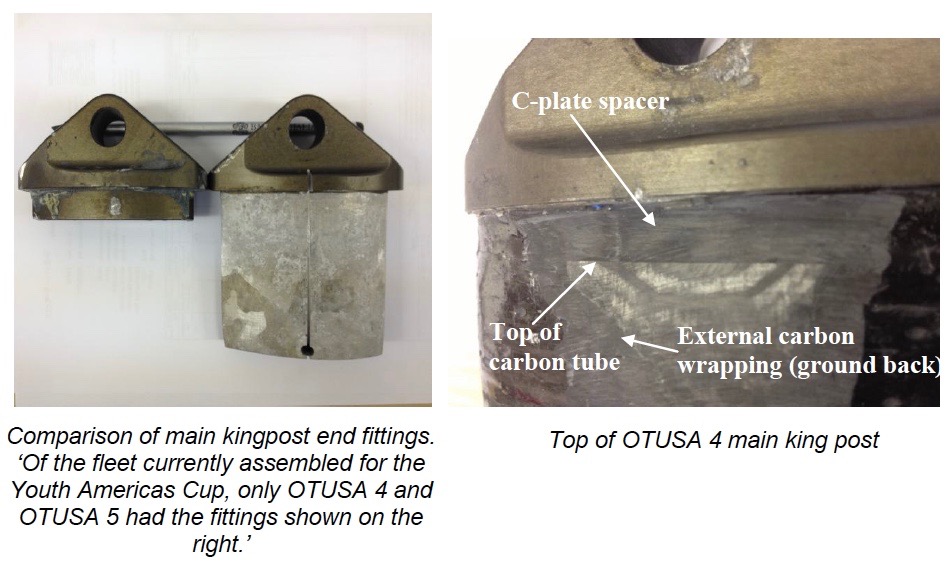
An international jury found that Oracle Team USA illegally modified their AC45 catamarans for the America’s Cup World Series. The “kingposts” of OTUSA’s AC45 catamarans were lengthened, reinforced and had weight added, all illegal under the strict “one design” rule for the AC45. (Note that the AC72 catamarans used in the America’s Cup are not one design and different rules apply to determine if an AC72 complies with the AC72 Class Rule.)

By putting weight in the kingposts instead of in the “permitted zone” shown in the diagram above, OTUSA may have improved their performance since the weight forward would lift the stern – an advantage in lighter winds.

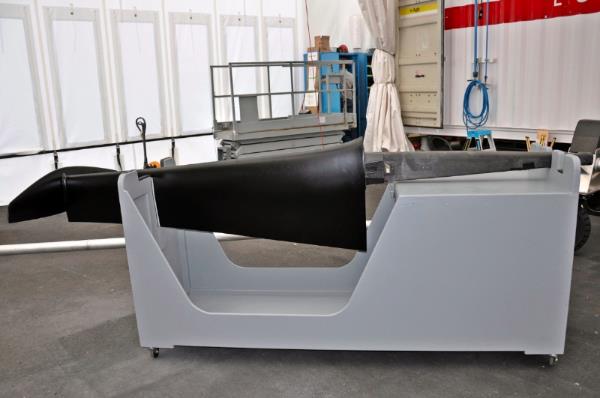
Evidence presented to the Jury showed that lengthening the kingpost would improve performance by increasing headstay tension and allowing better sail shapes, especially upwind. Lengthening the kingpost  “spigot” as shown in the photo below would increase reliability and add weight. 
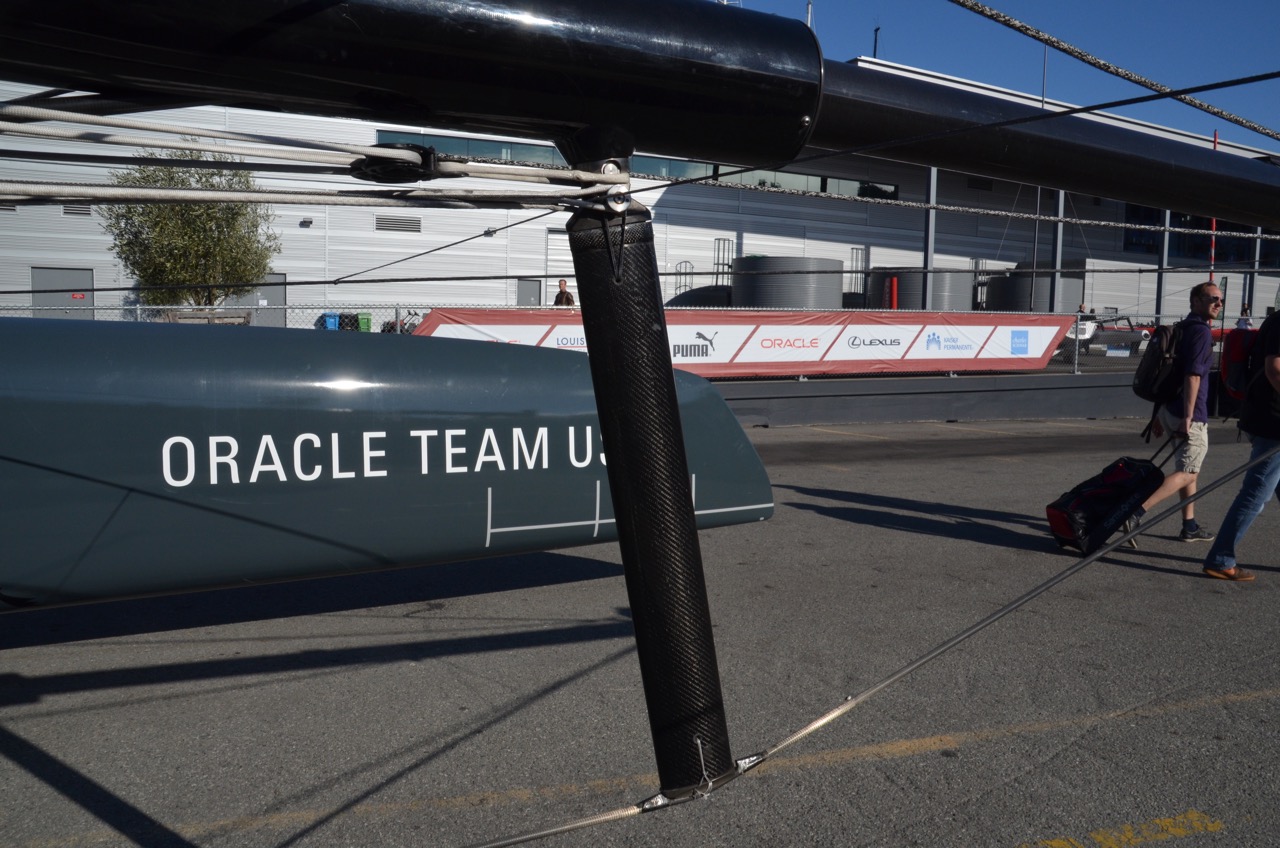
America's Cup - AC45 yacht - forward kingpost
America’s Cup – AC45 yacht – forward kingpost

July 31, 2013 By Jack Griffin

Full foiling gybes on AC72

Emirates Team New Zealand sets the standard in the AC72. Watch them complete a gybe while staying up on the foils.

Video:  ACTV

Here is an amateur video of Oracle Team USA foiling through a gybe while training.

Video:  John Navas

In the same video you can see footage of Artemis training yesterday, Tuesday 30 July 2013.

July 31, 2013 By Jack Griffin

America’s Cup Update

America’s Cup 34 got off to a rocky start in the July round robin phase:

  • Artemis was still building their boat and did not race
  • Regatta director Iain Murray lost a protest by Emirates Team New Zealand and Luna Rossa
  • Luna Rossa boycotted the first race
  • ETNZ dominated Luna Rossa, winning by as much as 7 minutes

But there is good news, too!

  • Artemis launched their boat and foiled on the first day
  • The AC72’s are amazing to watch
  • Oracle Team USA has been training with two boats. Can you tell them apart?
  • The semi-final between Artemis and Luna Rossa will be full of emotion –
    can underdog Artemis be competitive with the Italians?
  • The America’s Cup Match in September will be spectacular – one of the boats may dominate, or we may have a knock down, drag out battle.

Racing next week: Artemis vs Luna Rossa in semi-final

  • Best of seven – first to four wins.
  • First race Tuesday 6 August.
  • One race per day – seven legs. See the course layout here.
  • Race days:  Aug 6, 7, 9, 10;  If neede: Aug 12, 13, 15

Louis Vuitton Cup Final

  • Starts August 17
  • Emirates Team New Zealand vs semi-final winner

America’s Cup Match

  • Starts September 7
  • Oracle Team USA vs Louis Vuitton Cup winner

Full schedule here.

July 2, 2013 By Jack Griffin

ETNZ Protest – what’s it all about

ETNZ has protested ACRM for making changes to the AC72 Class Rule. According to this rule, changes can only be made with unanimous approval of the competitors.

ACRM claims that the safety recommendations became part of the rules since those recommendations were submitted to the US Coast Guard as part of the Marine Event Permit application.

ETNZ endorses almost all of the safety recommendations. But… they claim that the recommendation on “rudder elevators” (underwater wings a the ends of the rudders) is not a safety issue but a performance issue. And, they believe this change to the rule will benefit their competition. They don’t name Oracle Team USA as the team that will benefit, but Luna Rossa does.

If you want the techie details….

The class rule did not allow rudder elevators to extend outside the width of the hulls. ETNZ and Luna Rossa built asymmetric elevators to respect that rule. The rule also forbade adjusting the the angle of the elevators while racing, and required a new measurement certificate if the angle was changed between races, on shore. The rule as modified by ACRM eliminates those restrictions.

Remember that Luna Rossa bought their boat design from ETNZ, as permitted by the rules. Both teams have been foiling stably with asymmetric rudder elevators that comply with the original rules. They believe OTUSA and Artemis will benefit those teams can use rudder elevators with less restrictive rules.

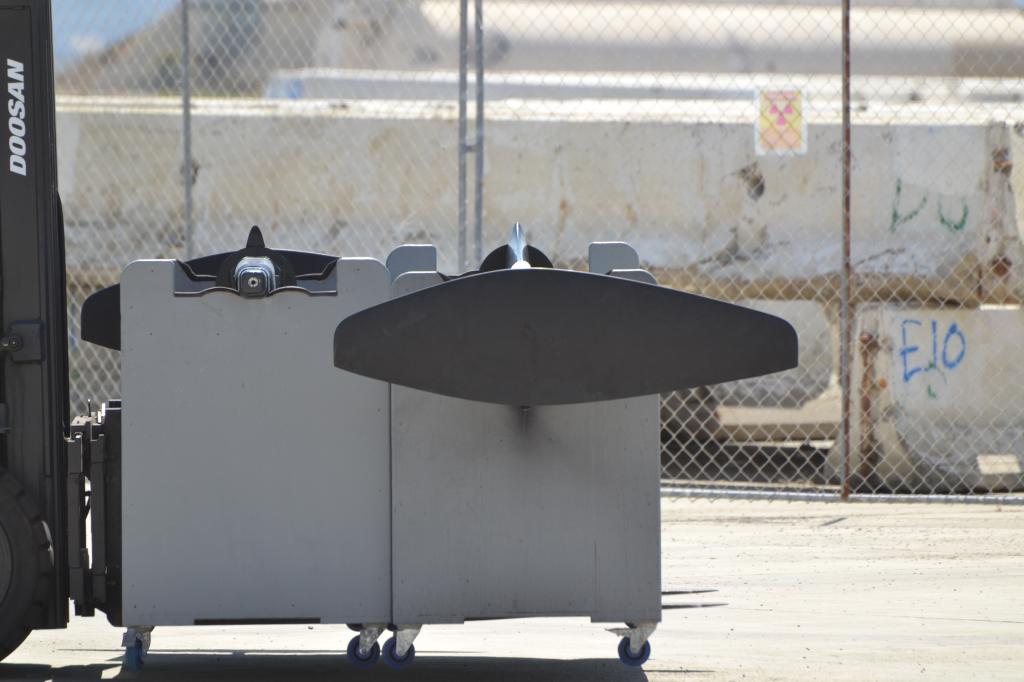
America's Cup Luna Rossa's rudder, with elevator                                  Photo: Pierre Orphanidis
Luna Rossa’s rudder, with elevator Photo: Pierre Orphanidis
America's Cup Luna Rossa's asymmetric rudder elevators                          Photo: Spitfile Image
Luna Rossa’s asymmetric rudder elevators Photo: Spitfile Image

What happens next? How will it affect the race schedule?

The International Jury will hear the protest beginning next Monday, July 8. ETNZ has already said they will accept the jury’s decision, regardless of whether it goes their way or not.

Luna Rossa may choose not to race until the jury makes its decision – meaning that the first round robin race may not happen until July 13. The race calendar is posted here.

If you want the gory detail of the rules and legal issues…

Attorney Cory Friedman gives his analysis of the protest and the rules situation here.

April 17, 2013 By Jack Griffin

AC72 design – ergonomics – grinding stations

Is ergonomics the sleeper issue in AC72 design?

Three AC72 designs. Three ergonomic approaches for layout and crew choreography. The 2013 America’s Cup in San Francisco may be decided by crew work – the short, tight courses will mean a lot of maneuvers. We will look at crew choreography in another article; here we’ll just show the boat layouts.

Oracle Team USA


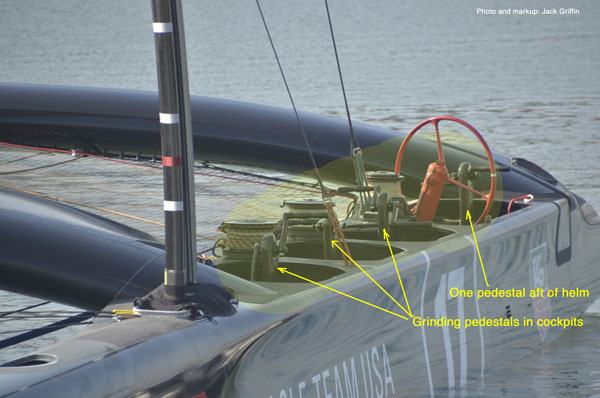
America's Cup Oracle Team USA AC72

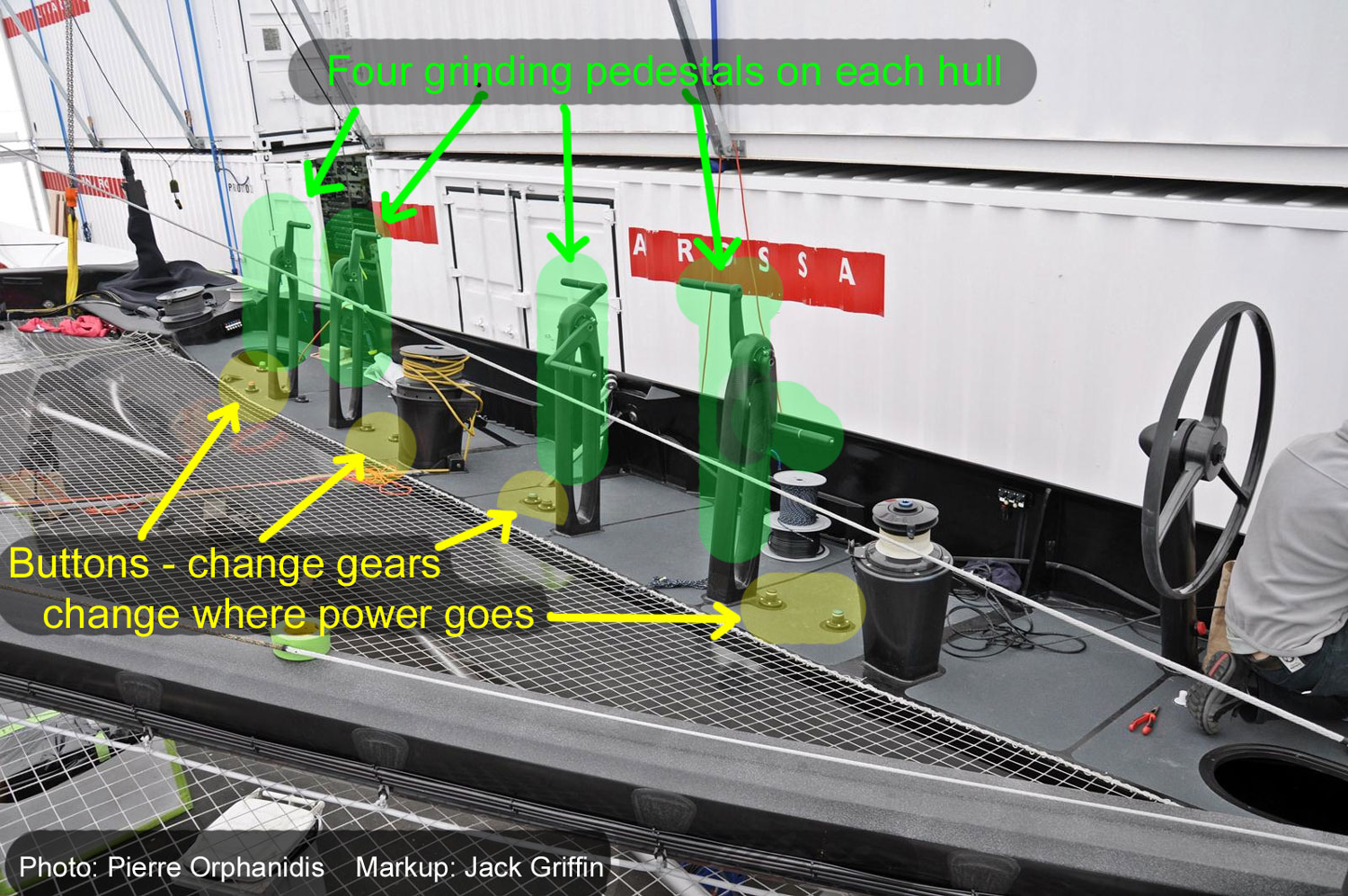
Consistent with their attention to aerodynamics, OTUSA has their grinders face fore and aft, standing in cockpits, to reduce windage. There are four grinding pedestals on each hull. One of the grinding stations is aft of the helm. Advantage: less aero drag. Disadvantage: harder for the crew to get in and out of the cockpits.

Artemis Racing


America's Cup Artemis Racing AC72

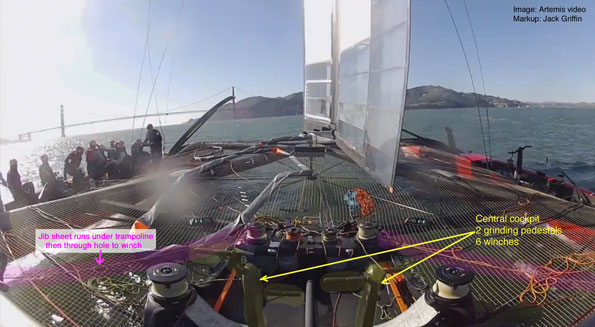
Unlike the other three teams, Artemis does not have four grinding pedestals on each hull – only two. Their boat has a central cockpit with two more pedestals and six winches. Advantage: saves the weight of two pedestals on the boat. Disadvantage: reduces righting moment when the crew are not on the windward hull.

Update: Artemis removed their center cockpit. Photos and story here.

Luna Rossa and Emirates Team New Zealand


America's Cup Luna Rossa and Team New Zealand AC72

Luna Rossa bought their design from ETNZ (yes, this is legal under the rules), so both AC72 designs have the same layout, with four grinding pedestals on each hull, facing side to side in a very open layout with no cockpits. All four pedestals are forward of the helmsman. Advantages: The open layout makes it easy for the crew to move from one hull to the other during maneuvers. Disadvantage: more aero drag from crew standing sideways.

Luna Rossa will not build a second AC72 but will continue to develop their boat.  ETNZ has evolved their AC72 design and built second boat, which includes changes to reduce aero drag.


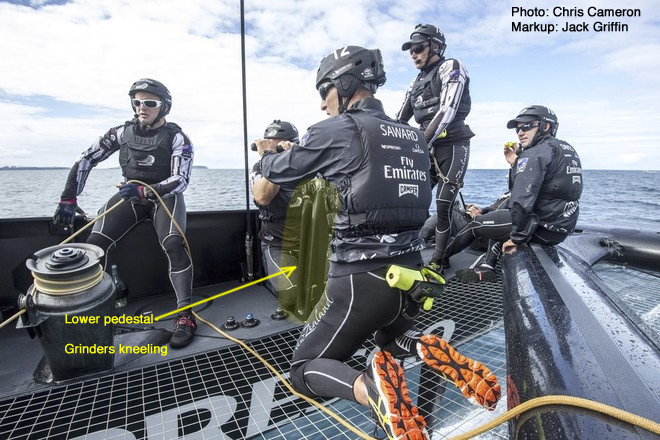
Notice how they have lowered the grinding pedestals in boat two. Advantage: less aero drag when the grinders kneel. Disadvantage: less efficient grinding position.

America's Cup ETNZ lowered the pedestals on their second AC72, to reduce windage

  • « Previous Page
  • 1
  • …
  • 31
  • 32
  • 33
  • 34
  • 35
  • Next Page »
  • About
  • America’s Cup Guide
  • News
  • Videos
  • Search

Copyright © 2026 Cup Experience