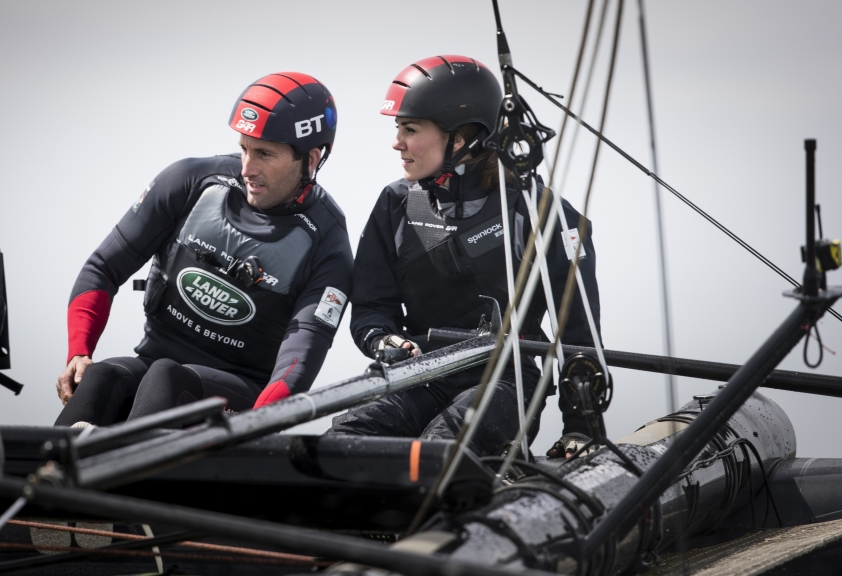
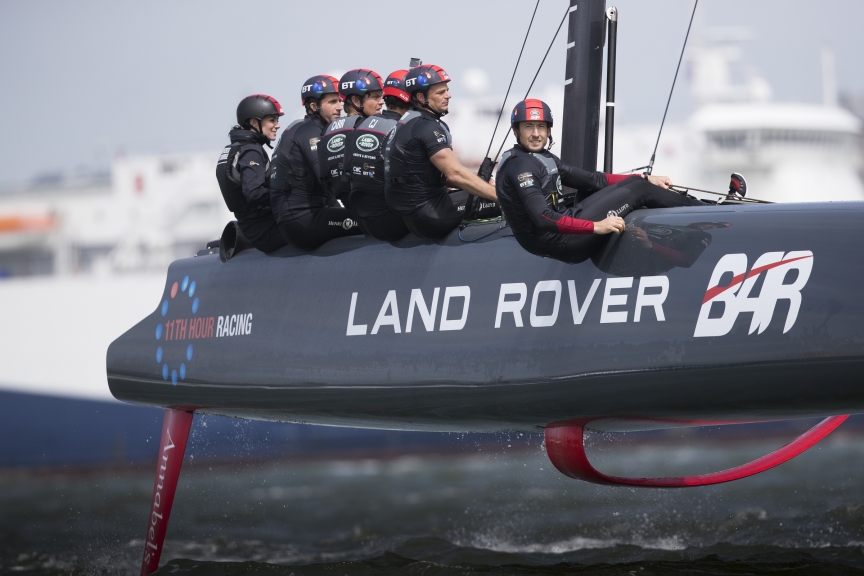
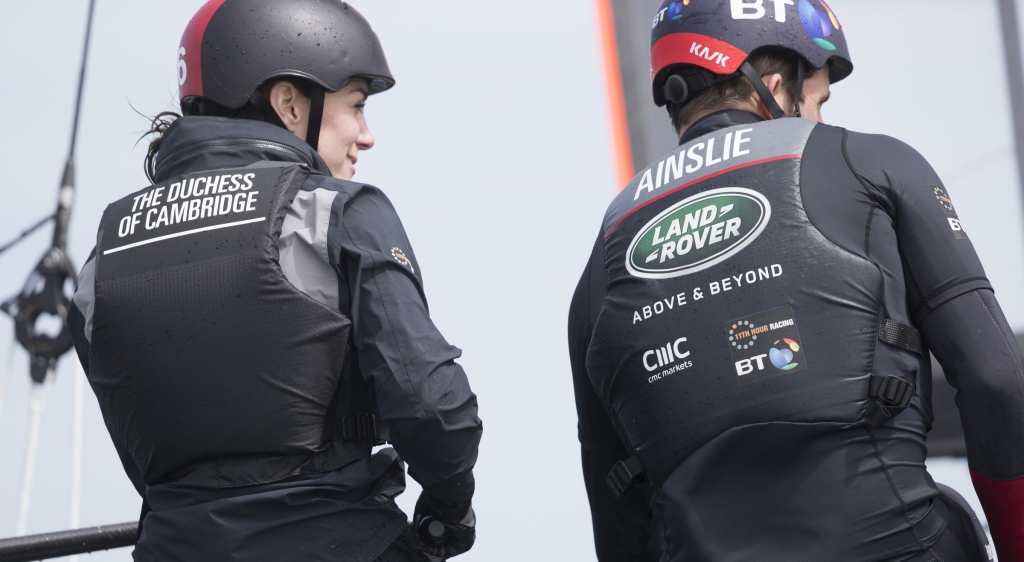
Her Royal Highness Catherine, Duchess of Cambridge is the Royal Patron of the British team and was recently in Portsmouth to open the team’s new education centre with STEM curricula for UK schoolchildren. She also went for a sail.
Many America's Cup fans say this is their best source of information.
Her Royal Highness Catherine, Duchess of Cambridge is the Royal Patron of the British team and was recently in Portsmouth to open the team’s new education centre with STEM curricula for UK schoolchildren. She also went for a sail.
Light and shifty winds combined with the Hudson River’s current to challenge both the Race Committee and the teams. On Saturday only a provisional race was held, after the TV window had passed. It was the third time in five regattas that a full day of racing was lost. The crowds in the AC Village and lining the river edge were excited just to see the AC45F’s even if they had to be towed to show off their foiling.
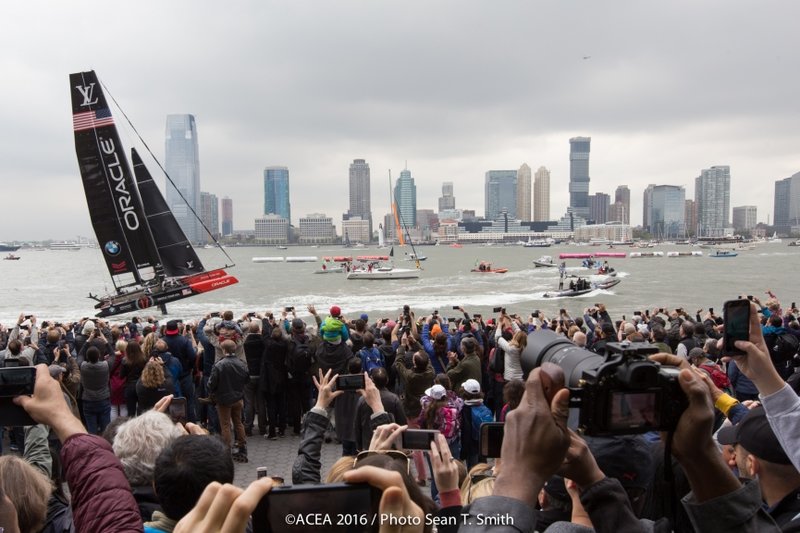
The crowd loved seeing the race boats foiling, even when they had to be towed on Saturday in order to put on a show.
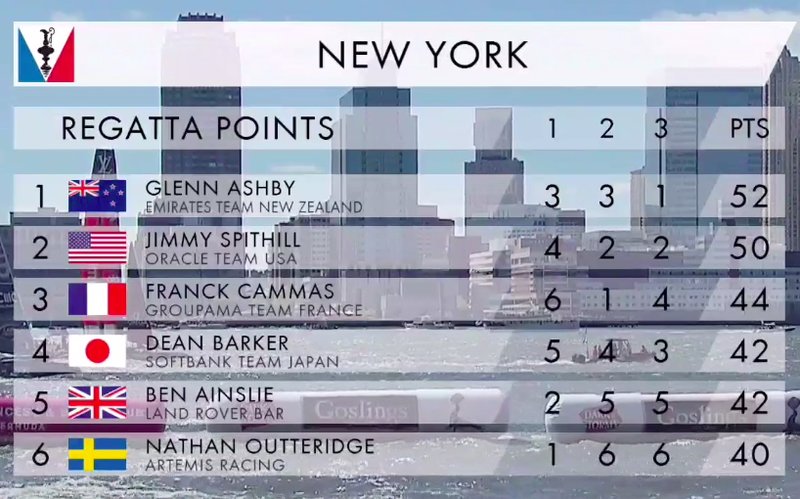
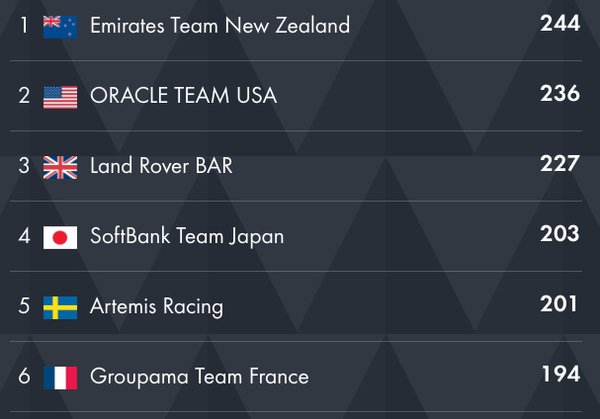
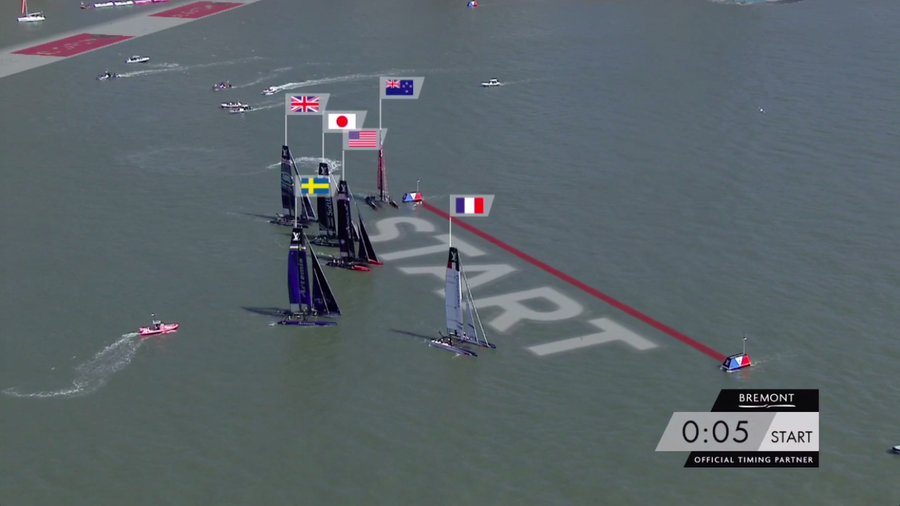
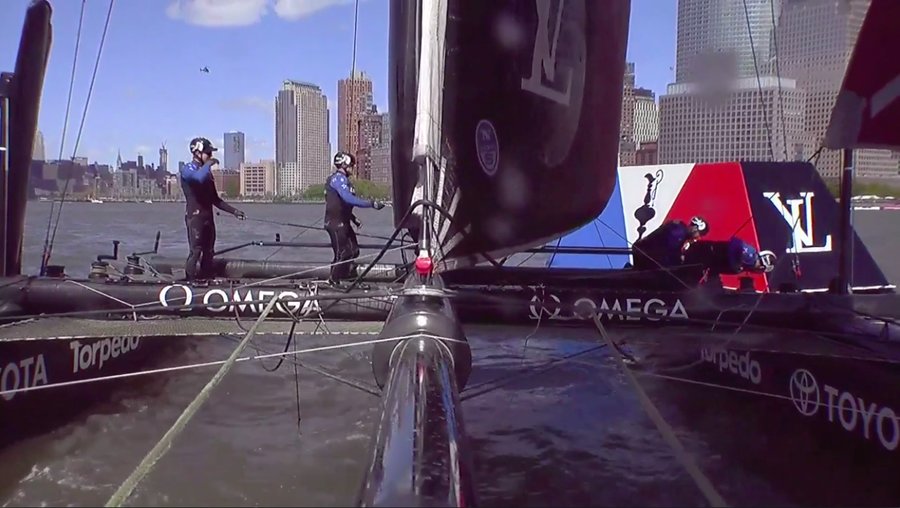
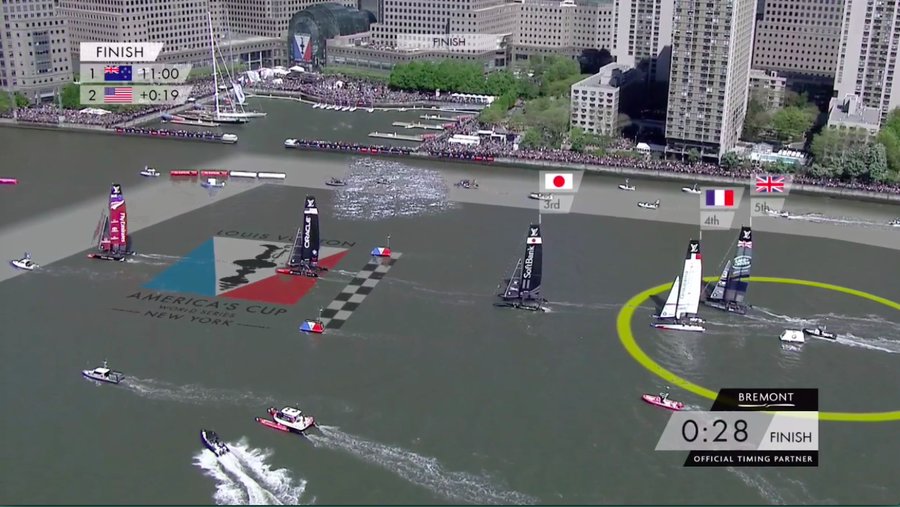
Going into the last race, all six teams had a chance to win the regatta. With four of the teams bunched on the downstream side of the course, struggling to avoid being carried outside the course limits by the current, the Kiwis found a gust and roared off to win the race and the regatta.
(missing photo – 1Feb’17)
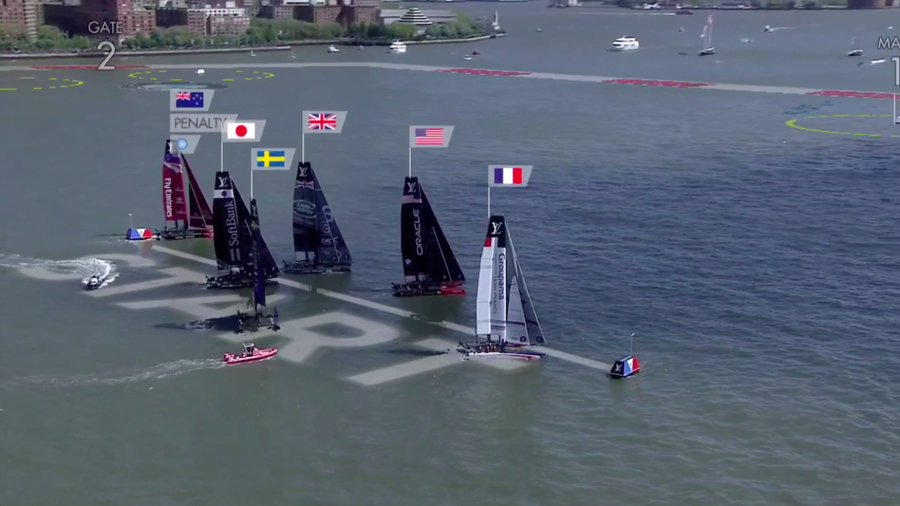
Race 3 Leg 4: The current, flowing from top to bottom of the image, has carried Land Rover BAR and SoftBank Team Japan outside the course limit, giving them penalties. Meanwhile you can see the ripples on the water where the gust has launched Team New Zealand into the lead and on their way to winning the race and the regatta.
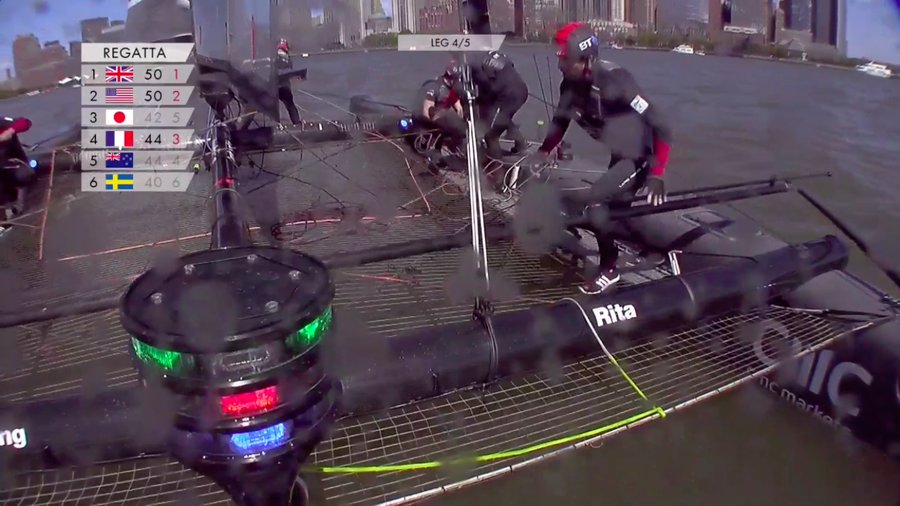
The debate about nationality rules always stirs passions. Having a strict nationality requirement for the crew would probably boost audience interest, like for the Olympics and the football (soccer) World Cup. But it would also reduce participation and make it hard or impossible for new countries to compete.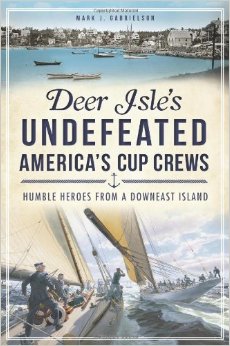
What few people realize is that crew nationality rules were introduced only in 1980 and were dropped 10 years ago. In 1895 and 1899 when American fishermen from Deer Isle, Maine were the crews on “Defender” and “Columbia,” they made news, since crews on US defenders before and after were often Scandinavians.
Charlie Barr, skipper of “Columbia” and later of “Reliance,” was Scottish born. Even “America” had a British pilot on board to navigate around the Isle of Wight in 1851. Barr was a pure professional. He didn’t hesitate to go back to Scandinavian crews for the 1901 and 1903 defenses. Barr would certainly agree with the current philosophy of hiring the best sailors, regardless of nationality.
For the 2017 America’s Cup we have three mostly national teams – Land Rover BAR, Groupama Team France and Emirates Team New Zealand – and three mostly international teams – Oracle Team USA, Artemis Racing and SoftBank Team Japan.
What do you think about nationality requirements? Send me your comments and in a few weeks I’ll report back on what I hear from you.
A close look at the three experimental boats launched by Land Rover BAR lets us see how the evolution in their test program.
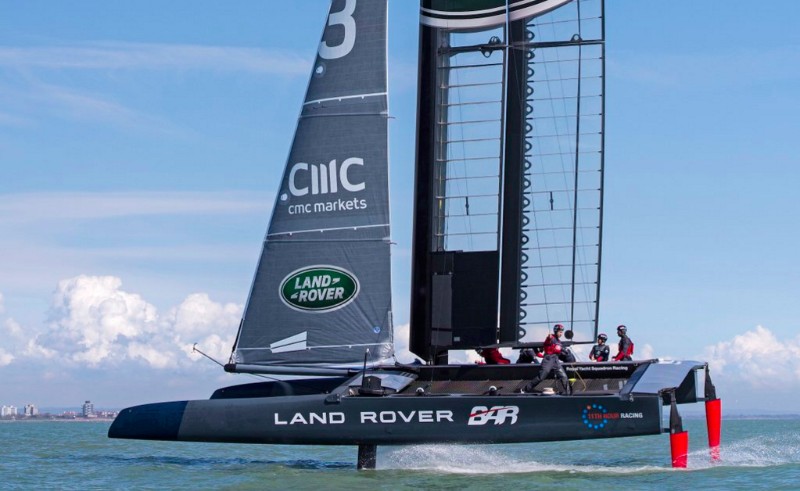
Notice the rudders hung off the stern on Land Rover BAR’s new “T3” test boat. Image: Land Rover BAR
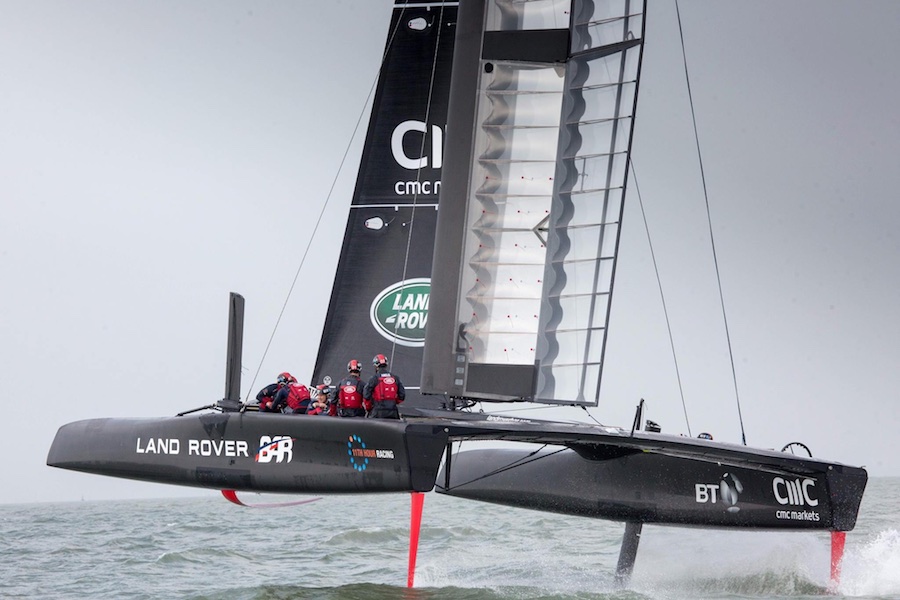
Land Rover BAR’s “T2” – notice how the rudders are mounted. You can see the cable and kingpost understructure. The crew are in cockpits with grinding pedestals and the boat has wheel steering. The crossbeams were wider, approximating the dimensions of the AC Class yachts that will race in 2017. Image: Land Rover BAR.
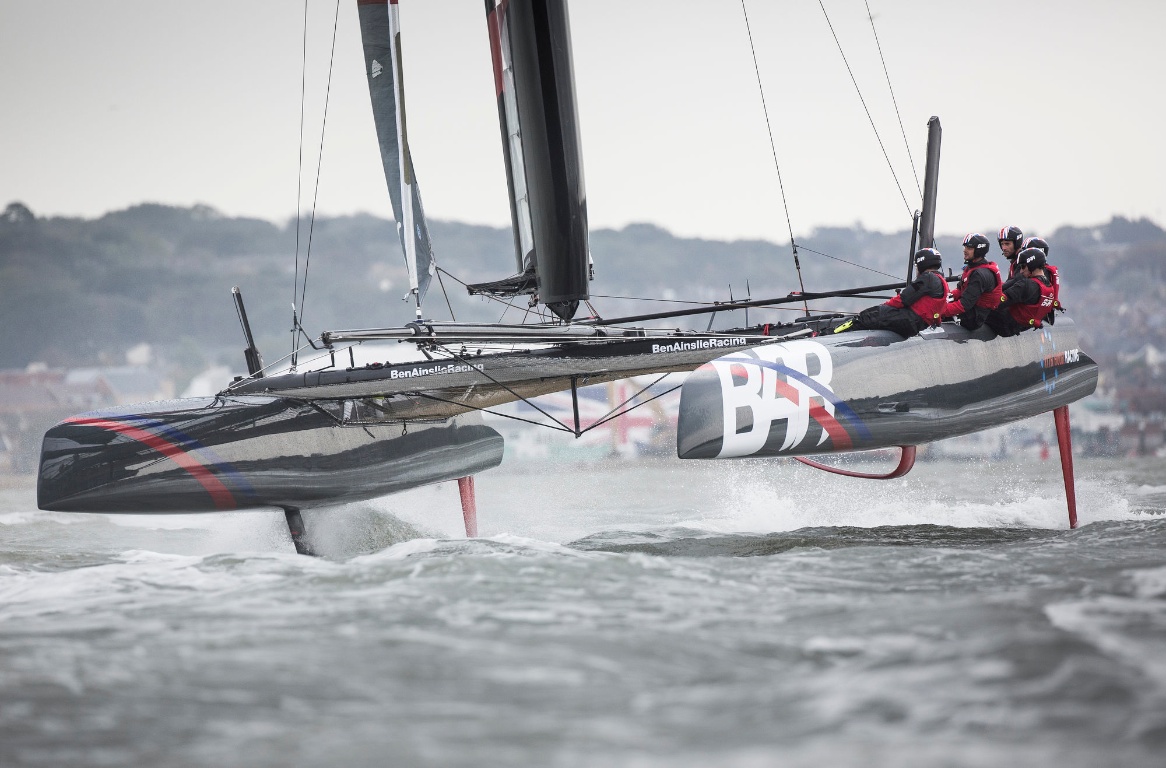
“T1” had no cockpits, no grinding pedestals and tiller steering. The understructure was cables, like on a standard AC45, but had no forward kingpost, since the boat was not intended to sail with a gennaker. The crossbeams were the standard AC45 beams, so the boat had the same dimensions as an AC45 rather than the wider AC Class that will be raced in 2017
Ben Ainslie’s first test boat was a slightly modified AC45: tiller steering, no grinding pedestals, no cockpits and the original crossbeams and understructure. T2 had wheel steering, cockpits and pedestals but surprisingly stayed with cables for the understructure and did not have a pod under the wing. Now they have launched their third experimental boat. The new “T3” AC45X boat has a pod under the wing. The clearly visible differences are the pod and the rudders hung well off the stern of the boat. Hanging the rudders off the stern allows the designers to get closer to the dimensions between the rudders and the foils that the 50 foot long AC Class race yacht will have. The test boat must respect the rule that the its hulls must have the same lower shape as an AC45, but the new rudder mounts give the effect of a longer hull.
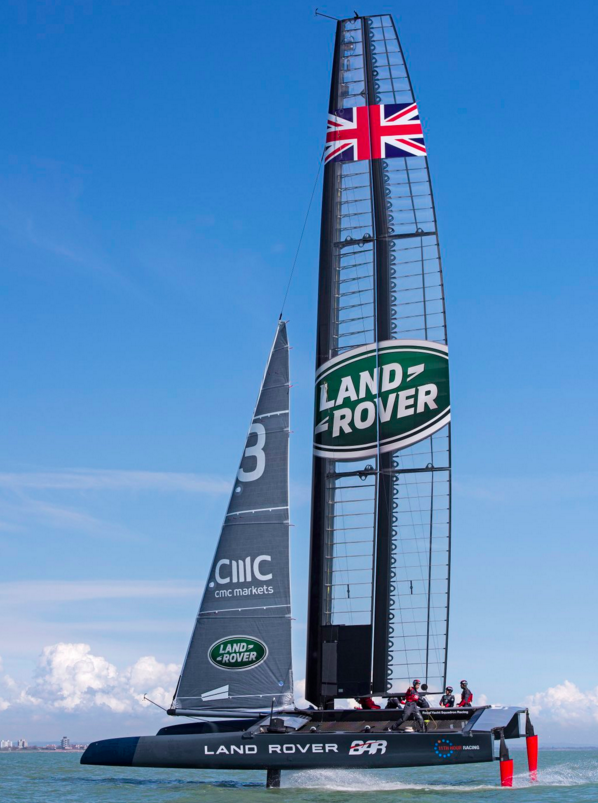
T3’s wing appears to have a shape similar to Oracle’s latest wing. Both of them are probably the dimensions of an AC Class wing, but they will certainly have very different control systems. Image: Land Rover BAR