Daggerboard design and control systems will be key to winning the America’s Cup.
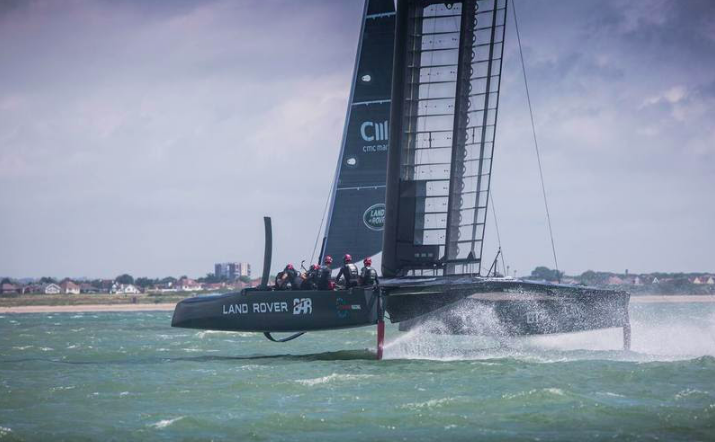
Daggerboard with a reverse curve in the vertical part, sailing in “T3” or “T4.” The reverse curve allows the underwater board tip to be at the maximum beam when fully lowered. With a straight board or C-shape, the cant control can also provide maximum beam.
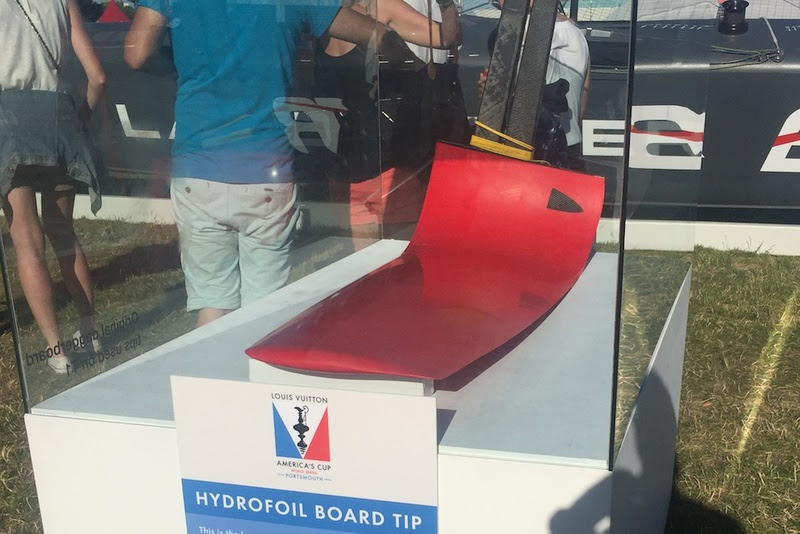
Board tip – this part provides most of the lift. Why is it a separate piece? Originally the Protocol allowed teams to test more shapes if they built “two piece daggerboards” instead of “one piece daggerboards.” This tip was built with a “mortice and tenon” joint – the two vertical black bits are the tenon. The Protocol was changed when the measurers pointed out that there was no way to define clearly the difference between a one-piece and a two-piece board.
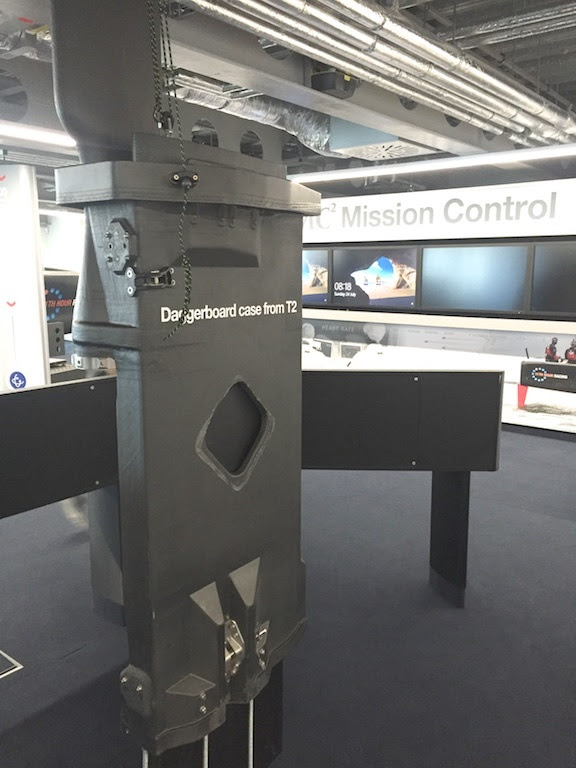
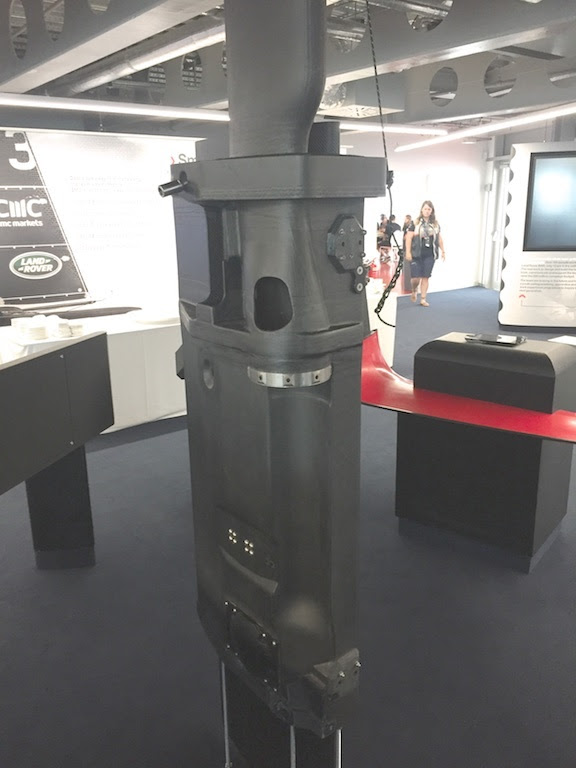
In the Tech Deck. These two photos show a daggerboard case from “T2.”
Daggerboard control systems
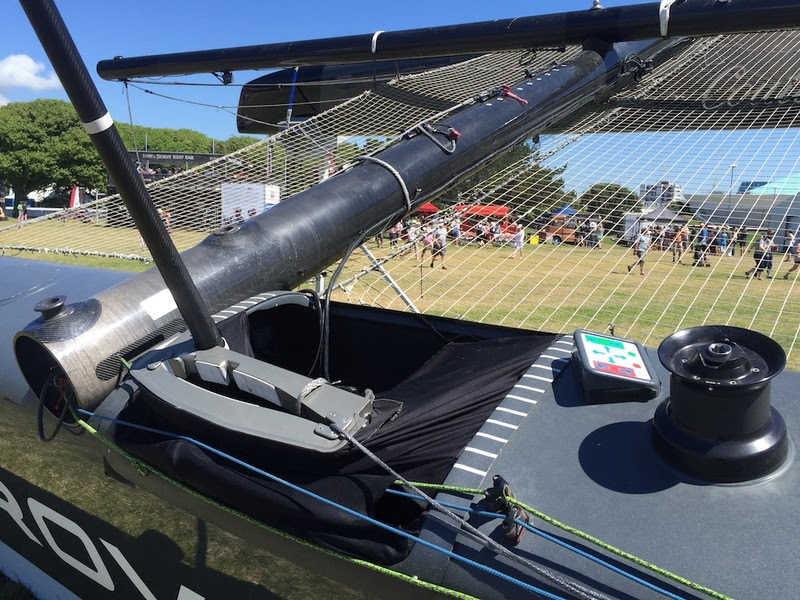
BAR’s “T1” on display in Portsmouth, daggerboards removed. You can see the daggerboard case and a control panel just forward of the winch.
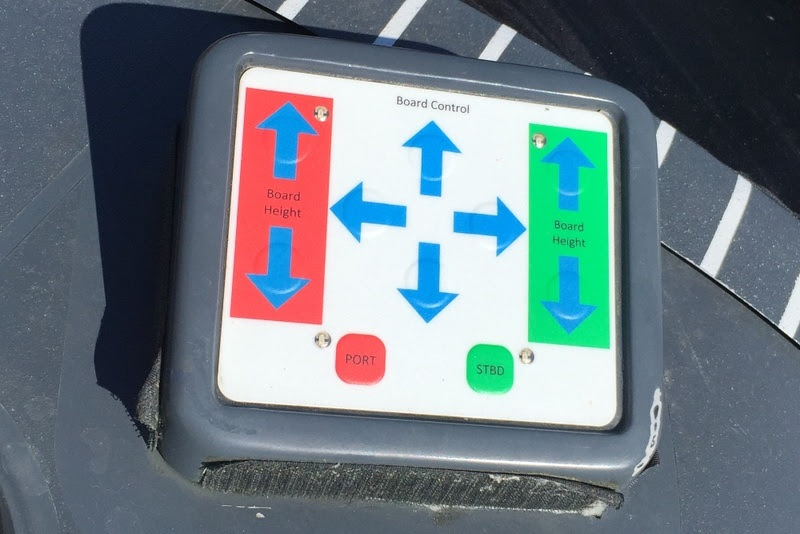
Closeup of the control panel with buttons to raise and lower the daggerboards on either side of the boat.
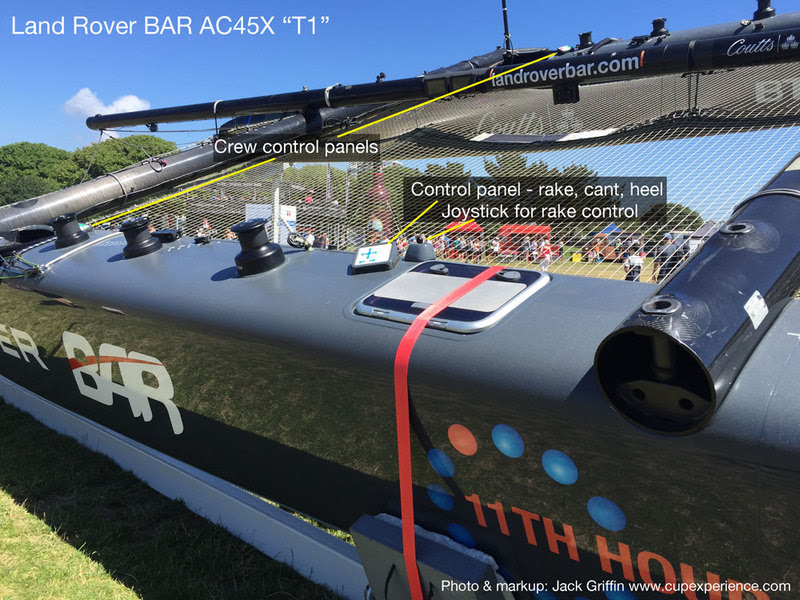
“T1” is a modified AC45 platform with tiller steering, winches, no grinding pedestals and no cockpits. It has a center spine rather than a pod. The helmsman has a joystick to control board rake and a control panel for board cant.
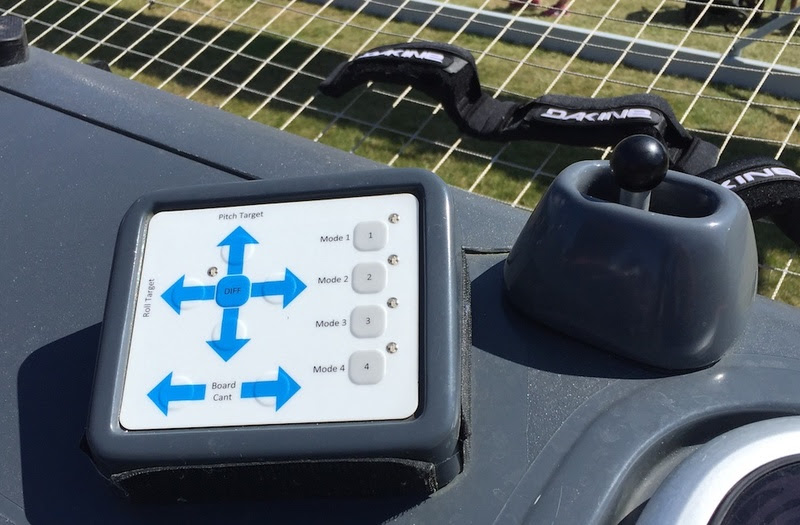
Helmsman’s control panel with settings for four different modes and targets for heel (roll) and fore-aft pitch.